Showing posts with label homelessness. Show all posts

Friday, 29 January 2021

World's first graphic novel made by homeless people


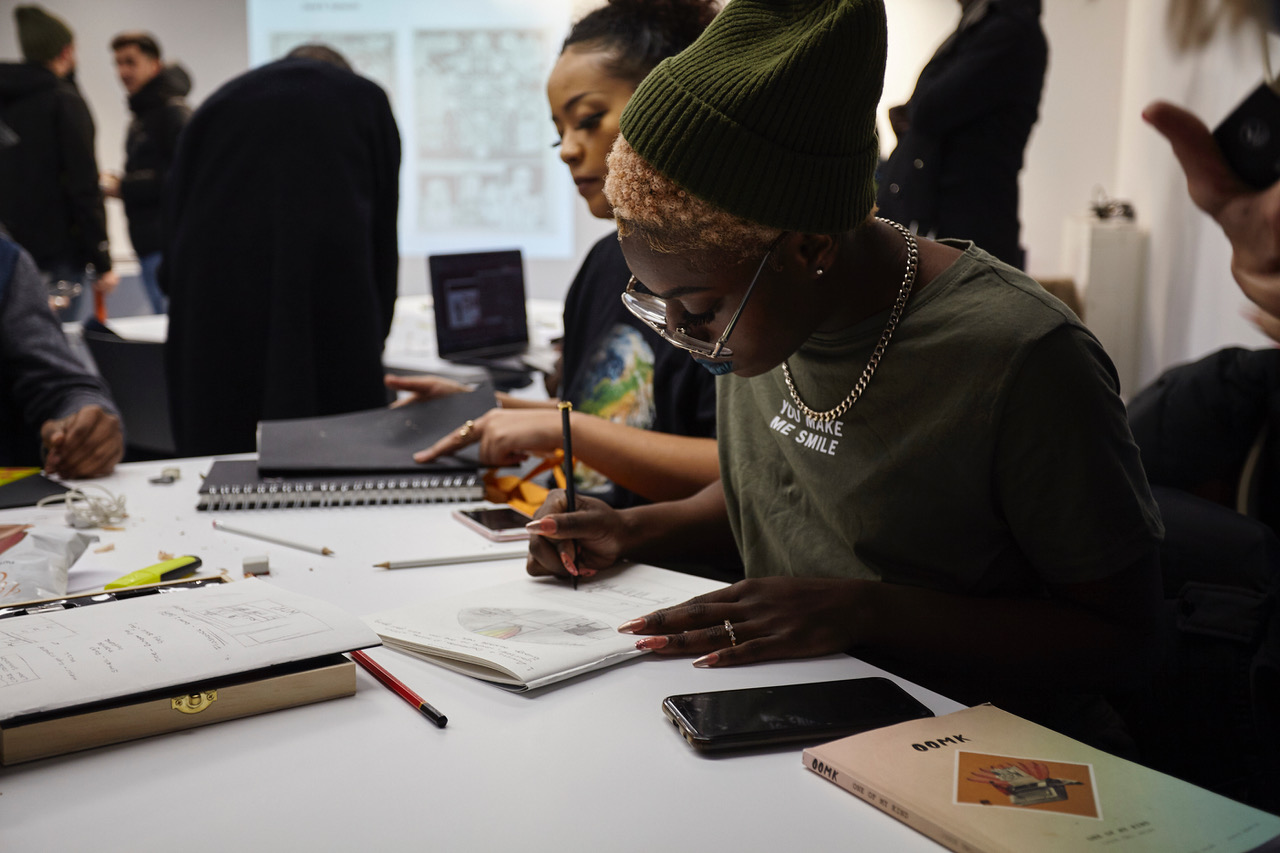
Authors working on The Book of Homelessness/Courtesy of Accumulate

I love graphic novels and I love stories told by the people who are experiencing them, so this is my kind of book.

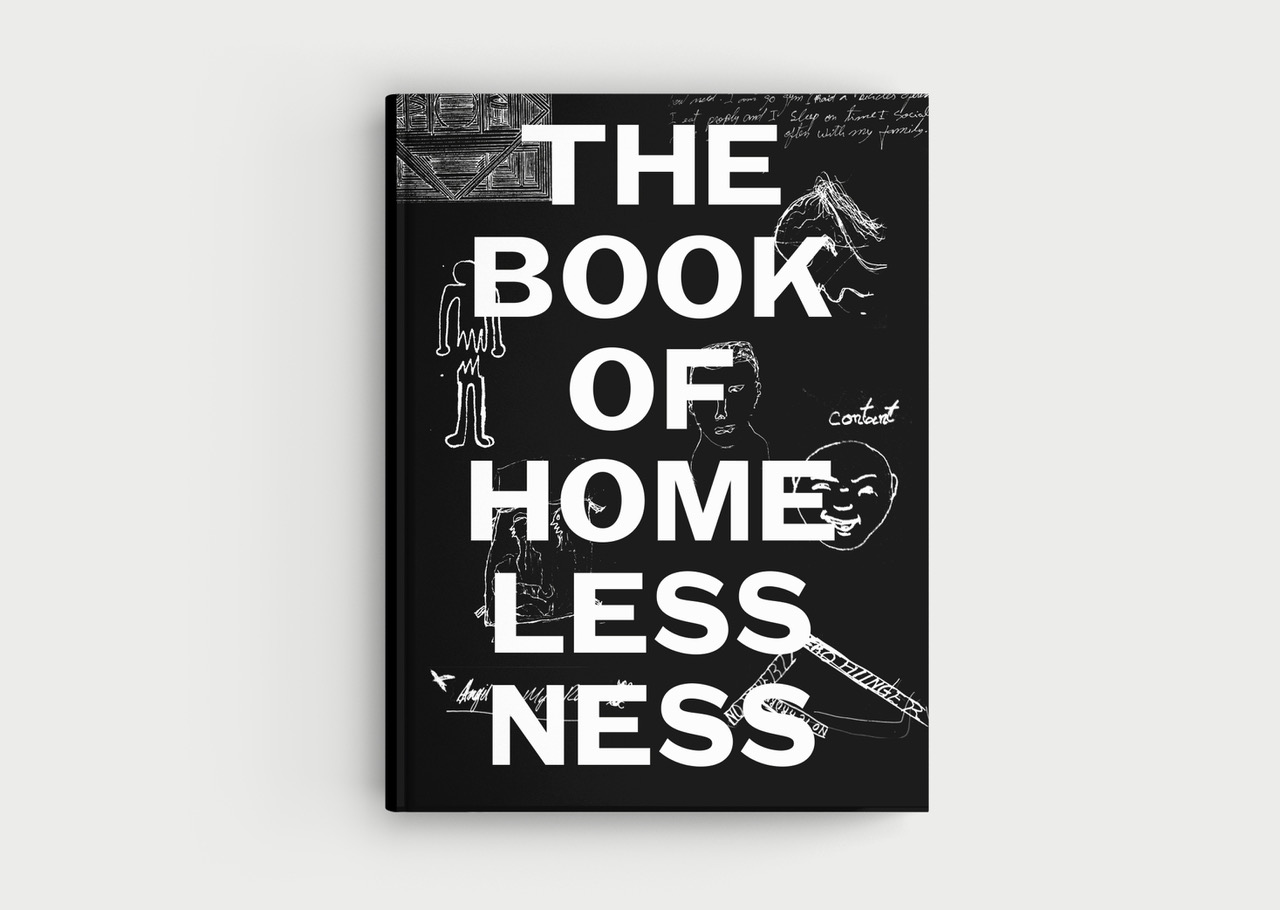
The Book of Homelessness, recently published in the UK, shares the life stories of people affected by homelessness through their own drawings, texts, poetry and photography. Their stories are personal, emotional, raw and honest. They talk about pain, abuse and dysfunction, about families, war, rejection and misplaced love, and  about overcoming difficulties and fighting and succeeding. 


By telling their own stories in the form they wanted to tell them, the authors hope to show the complexities of homelessness and what causes it – and perhaps help change perceptions around homelessness.
 The project is the brainchild of Marice Cumber, founder of youth homelessness charity Accumulate, which describes itself as “the art school of the homeless”.

The charity encourages young homeless people’s creativity through courses on fashion, photography, sculpture, graphic design and more. They also hold exhibitions and source funding to send really talented individuals to arts college. (So far, they’ve sent 20 to arts college).

Accumulate launched a crowdfunding initiative for the book two years ago, and creative workshops with the participants – who were all living in hostels, shelters or temporary accommodation – started last January.

Samantha Morton, herself previously homeless, has written an intro to the book entitled “How homelessness shaped my life”, and Colin Firth has said about it: "This is a remarkable collection in any context. The fact that these beautiful, personal works are the expressions of our neighbours who are homeless makes it untenable to ignore them ever again."

All profits from The Book of Homelessness are shared with its authors and Accumulate so it can continue to provide creative workshops for people who are homeless.

Please visit Accumulate to purchase a copy of the book (£25)

Friday, 24 July 2020

Hear Us – How refugee and asylum-seeking women experienced the pandemic


“Being destitute during a pandemic is the worst feeling ever. It makes you feel like you are just a box and if someone wanted to kick you, they could. It’s not easy relying on other people for food and shelter and it has caused me a lot of mental health issues,” says Edna (not her real name), who is living with no statutory support and relying on charities for her survival in Liverpool.


Edna is one of 115 refugee and asylum-seeking women in the UK who have shared their experiences during the pandemic for ‘Hear Us’, a new report by Sisters Not Strangers, a coalition of eight organisations. 

Most of these women have already fled violence and abuse. During the pandemic, they became more vulnerable: three quarters of them went hungry, a fifth of them were homeless, and most of them said that their mental health got worse, according to the report. 


The government’s research on the impact of Covid-19 on BAME communities found that Black, Asian and minority ethnic (BAME) women are almost three times more likely to die from COVID-19, compared to white women. The intersection of gender, race and immigration status, coupled with the trauma of their past experiences, means that asylum-seeking women are among those BAME women most affected by the consequences of the outbreak.


With charities closed, women have been unable to access meals and small hardship payments that have become so crucial both for women within the asylum system, who live in poverty, and women refused asylum, who are so often left destitute.


Three quarters of the women surveyed went hungry, including mothers who struggled to feed their children. A third of women were at high risk from coronavirus, reporting a serious health condition such as asthma, heart disease and diabetes. While the government emphasised social distancing, a fifth of women were homeless, relying on temporary arrangements with community members, and moving from one house to another. Self-isolation was impossible for the 21% of women who were forced to sleep in the same room as a non-family member. Frequent handwashing was a serious challenge for the 32% of women who struggled to afford soap and other hygiene products. A fifth of staff and volunteers had supported women who were trapped in unwanted or abusive relationships during the pandemic. 

Lo Lo (not her real name), an asylum-seeking woman who was homeless in London during lockdown says, “I have serious health conditions that mean it would be particularly dangerous for me to catch the virus. For a week during lockdown, I slept on buses. I went from one side of London to the other, because it was free to travel on the bus then.”

“Previous research has established that almost all women who seek asylum in the UK are survivors of gender-based violence. Even before this crisis, we have seen how they are forced into poverty and struggle to find safety,” says Natasha Walter, director of Women for Refugee Women.  “During the pandemic they have too often been left without basic support including food and shelter. It is now vital that we listen to these women and ensure that we build a fairer and more caring society.” 

In exposing deep structural inequalities along existing fault-lines of gender, race, citizenship and class, the pandemic is testing our society. We cannot simply return to normal, the report concludes. “We must seize this opportunity to build back better, and to create a society centred on solidarity and human dignity in which the lives of women seeking asylum, and women of colour, are fully valued.”

The Sisters Not Strangers coalition includes Coventry Asylum and Refugee Action Group, Development and Empowerment for Women’s Advancement (Sheffield), Oasis Cardiff, Refugee Women Connect (Liverpool), Swansea Women’s Asylum and Refugee Support Group, Women Asylum Seekers Together Manchester, Women for Refugee Women (London) and Women with Hope (Birmingham)


Thursday, 19 March 2020

Women, Homelessness and Health


What do we know about the health issues facing homeless women? Of having no meal at all or eating five meals in one day for fear of having none the next day, of getting bed bugs and respiratory illnesses from sleeping on dirty mattresses and in damp places, of feeling too ashamed or exhausted to seek help?

Because homelessness is often seen as a male phenomenon, the experience of homeless women has been largely neglected by researchers and policy makers. We know far less about women’s homelessness than men’s – and almost nothing about health issues they face. Yet, homeless women have differing health needs to those of men and these specific needs are often overlooked in policy or service responses.


Women, Homelessness and Health, a new study by the homeless charity Groundswell and funded by the Greater London Authority, is focusing on these overlooked issues. The study is particularly valuable because it used researchers who have experienced homelessness, in all stage of the research process.
Groundswell researchers interviewed 104 women aged from 19 to 75 in London, using questionnaires, face-to-face interviews and focus groups.

They found that the trajectory to homelessness is often different for women and men: for women, the main causes are relationship and family breakdown, physical health issues and domestic abuse.  Not only is violence a cause of homelessness, but women also experience violence or harassment at homelessness services, day centres, hostels and on the streets, which is often a factor in perpetuating homelessness. Here is what one woman interviewed said:  “Being approached by men too often; being made fun of in the street; some guys take the micky out of you; guys touching but the tiredness from homelessness makes me let down my guard and get tired of fighting back. ” It is not surprising then that women are often reluctant to use services designed for and dominated by men, which can often be hostile places for women.

The research stresses that there is a clear need for gendered specific services, but they are not provided because homelessness is seen mostly as a men’s problem. “Women are not measured and counted – they are not as visible,” says Dr Joanne Bretherton, Co-Director, Women's Homelessness in Europe Network, University of York.  Rough sleeper statistics, for example, count people visibly sleeping rough.  Many homeless women sleep rough, but they make efforts to remain invisible – sleeping in hidden places or on buses - and so remain unknown to rough sleeper teams. 


“Often women will only access services when all other avenues, such as friends and family, have been exhausted,” adds Dr Bretherton.  “And they don’t seek help for fear that their children will be taken away.  They feel their mothering skills are judged all the time.”   Nearly half of the women in the Groundswell study are mothers and 22% of those women had children taken into care – an experience that was incredibly traumatic. 


Among the main findings, the study shows that participants have long and complex histories of homelessness, with 42% having been homeless more than once before and 70% having slept rough at some point of their lives. This suggests that women experience a cycle of repeated homelessness.

Three-quarter of the women interviewed have physical health issue problem compared to 37% of the general population. They mostly complain about joints, bones and muscles pain, problems with feet and stomach issues.  Many said that their health issues arose as a result of being homeless. This is unsurprising given the poor conditions women are sleeping in, the stress of homelessness and the amount of time women spend on their feet.

Sixty-four percent have a mental health issue- most commonly depression, anxiety/phobia and PTSD - compared to 21% of general population, suggesting that mental health conditions can develop and/or are exacerbated upon homelessness. In some circumstances, declining mental health can lead to addictions that where not present before homelessness.

Many participants spoke about how the stress and trauma of homelessness put pressure on their physical and mental health. “You are under stress constantly.  It means you are very vulnerable...in terms of illnesses and everything,” said one woman interviewed.  Stress causes headaches, hair loss, stomach pain, eye irritation, rapid heartbeat, panic attacks, chest pain and periods to stop.

Many say that the stress of being homeless and the lack of routine mean it is difficult for them to look after themselves or attend appointments.  Sixty-five percent say that they struggle to find the motivation and confidence to deal with their health issues.
“I can’t make appointment, [I need to] wash first and eat first. Survival comes first.  Last thing we have as dignity is to keep clean.”  
 
“Until we have a larger body of evidence about women's homelessness, there is a risk that policy responses to, and services for homeless people will not adequately meet the needs of women,” says Dr Kesia Reeve, Principal Research Fellow at the Centre for Regional Economic and Social Research (CRESR), Sheffield Hallam University. “It raises issues about, for example, maternal and reproductive health and wellbeing issues that rarely feature in other research but are central to some homeless women's experiences and needs.”
 

The report concludes that in order to better support the health of women experiencing homelessness there is a need for:
- a deeper understanding of the health of women experiencing homelessness
- more flexible, considered and participatory commissioning 
- flexible, compassionate and consistent support centered around individual need 
-  focused approach on the health of women who are homeless within NHS services
- joined up working between services and sectors who support woman experiencing homelessness 


You can read the full report here

Monday, 4 June 2018

RIP Kevin Headley, who died too young - like too many homeless people


Kevin Headley graduating from the FDGU journalism training programme at Groundswell/photo: Veronique Mistiaen

This is what I find most poignant:  Kevin, wearing his ubiquitous black hat,

looks straight at the camera. In his deep, quiet voice, he says: “Life expectancy for rough sleepers is probably between 42 and 47.”

Kevin was interviewed for a video during an awareness day at the homeless charity Groundswell.  People who have experienced homelessness, NGOs and members of the public had been invited to discuss how to improve public perception of homelessness and create engagement. As always, Kevin came armed with lots of statistics and strong arguments.

A few weeks later, he was dead. 

Kevin Headley, who sold the Big Issue outside Hackney Wick station in London for many years, died in hospital on May 5 after suffering a suspected heart attack. He was only 52. 

Homeless people die on average 30 years younger than the national average, according to a study by the homeless charity Crisis. These statistics are a terrible indictment of the way our society treats homeless people - and something that Kevin campaigned and worked hard to change.

I’ve met Kevin at Groundswell in September when I began training a dozen of people who were homeless or had experienced homelessness on how to be journalists.  The six-month project, called From The Ground Up (FDGU), is a collaboration between Groundswell and the Pavement, a pocket size magazine (and website) full of useful articles and resources for homeless people. The FDGU project is funded by Comic Relief.

FDGU’s aim is to equip “peer journalists” as Groundswell calls them with the tools they need to identify and report on issues important to them – issues often overlooked by the mainstream media.

The peer journalists had decided to report on shame experienced by homeless people and the impact it has on their health, well-being and ability to improve their situation. Kevin didn’t like that theme because he strongly felt that homeless people have nothing to be ashamed of and that it is society, which should be ashamed. And of course, he was right. The peer journalists also  wanted to talk about suicide, which is much higher among homeless people than among the general population. They’ve produced amazing work, which has been published in the Pavement in Jan/Feb 2018 and Marc/April 2018 and they keep contributing to the magazine.

During our workshops, Kevin would often sit on the side, hiding behind dark glasses. At first, I thought he might be dozing off, something not unusual as some peer journalists spend their nights on the streets or in noisy hostels and night shetlers. But there was always a mischievous smile on his lips and then, when feeling inspired, he would make a contribution – not always on topic, but always full of facts and interesting ideas. He had just been given his own page in the Pavement – the problem page, “done with a light and practical touch”, as Nicola Baird, the Pavement's editor described it.

He drew beautifully and loved working with artists and curating local art events and festivals.  He also worked as “health peer advocate" with Groundswell, helping people who are homeless access appropriate healthcare.

Kevin had so much to live for. He was dearly loved by so many and was full of projects and ideas. Let’s never think of Kevin as just another dreadful statistic. Homeless people shouldn’t have to die young. Homelessness is not inevitable.


Tuesday, 22 November 2016

From the Ground Up: homeless journalists tell their stories


-->
This is street-level journalism at its best.  These journalists make you feel the terror at being thrown out on the streets by a violent landlord or what the loss of social housing in London means.  They look at issues faced by people leaving the army. They write about the exciting Museum of Homelessness and they know the best squats in the capital and how these provide a sense of community to people who have none.

They are the 'From the Ground Up' citizen journalists. They all have experienced rough sleeping, so this gives them a unique insight into homelessness, the services and policies and their impact.  Homelessness has increased sharply over the past few years.  If society is to tackle the issue effectively, politicians, social service providers, charities and the general public should learn from them.

Ten citizen journalists have enrolled in ‘From the Ground Up’, a six-month programme run by the “people-powered” homeless charity Groundswell and the Pavement magazine.  Weekly workshops on news writing, communication, interviewing etc.  help them develop the confidence and tools they need to tell their stories and the issues that are important to them.

One of the key ways they raise awareness is by publishing their stories in the Pavement, a pocket-size magazine packed with news, stories, art, cartoons and useful information for homeless readers (as well as a website).  

And so, on a cold autumn morning, I met Jimmy, Mahesh, Julz and a few other citizen journalists at the Groundswell office near Vauxhall for a day-long workshop on feature writing.  We discussed how to use brain mapping to find story ideas and how you need both facts and emotions in order to turn them into engaging features.  We practiced how to construct a story, how to write a vivid introduction and how to show rather than tell, using the readers five senses.

At the end of the programme, the group will produce a special issue for the Pavement, planned for February/March. They have chosen to focus on changes in homelessness due to economic pressures and gaps in health care provision for homeless people.


Being homeless has always been very hard, obviously, but they say that things are getting much worse. Jimmy, who found himself on the streets as a young man some 30 years ago, believes he might not have made it today…


The number of people sleeping rough in England on any one night has doubled since 2010 and increased by 30% in the last year, with an estimated 3,569 people now sleeping on the streets across England, according to new government figures.  The number of families with children in temporary accommodations has also increased significantly.  And as we see more movement between countries, migration has also become an increasingly important part of the story.


From the Ground Up citizen journalists, get your stories out there! 


Wednesday, 3 June 2015

Word on the Street: homeless people tell their stories


“I speak several languages”, 
“I was a heroin addict”,
“I feel reborn”,
“I was sent to prison at 17”,
“I went to university”…

I had asked the eight people sitting around the table to share a piece of interesting information about themselves – something that people walking by them on the street wouldn’t know. 

They were five men and three women – all homeless - with very diverse life experiences and backgrounds, and amazing stories to tell. Like most homeless persons I had worked with before, many had a “normal”, even promising life before something sent them off course: the death of a loved one, an accident or illness, a drug or alcohol habit, the end of a relationship, the loss of a job. 

They had come to the office of Poached Creative, a social enterprise communication agency in Hackney, London, to learn how to tell their own stories, so that they could publish them in the Pavement, a free print and online magazine packed with news, stories, cartoons and useful information for homeless readers. 

During the workshop, we discussed the power of stories, what to share and what to leave out, storytelling tools and what makes a good story. We talked about structure and style – using your own voice, painting pictures, using details and showing instead of telling.  Instead of covering their whole life, we decided to focus on one telling event that said something bigger, on people they have met, places they have been, dreams and struggles.

I used various prompts to help them think about their lives, including sharing an interesting fact about themselves. I got the idea watching a moving video featuring homeless people in Orlando, Florida, telling their “cardboard stories.”

I haven’t seen their final stories yet, but previous contributors to the Pavement wrote about their life “before” or the event that lead them to become homeless. One wrote about how miserable it is to be ill on the streets, where you cannot get warm and the police moves you all the time; others described with humour a night in a hostel or a meal in a soup kitchen.

The Storytelling workshop is part of the Pavement’s Word on the Street project aimed to help homeless people to contribute as fully as possible to the magazine.  For three months, they are given training in everything from interviewing and photojournalism to storytelling and computer skills, lead by professional journalists. The project is managed by Poached Creative, a fantastic social enterprise training and working with disadvantaged people on various creative communication projects.  


Tuesday, 13 August 2013

Suspended coffee - a global solidarity movement

Here is a story on the phenomenal growth of the suspended coffee movement I have just written for Positive News. By the way, if you haven’t heard of Positive News, have a look: it’s a publication trying to focus more on constructive, positive and solution-driven journalism.  They don’t cover rosy, fluffy stuff, but articles that make you want to get involved, make you feel connected, inspired and that give hope.
I loved hearing stories of shop owners all over the world who decided to follow the campaign  and the stories about the people who could get a free coffee that way.  I could only place a few examples in this article, but there are lots of heart-warming tales of solidarity, community feeling and smiles. 

Of course, a cup of coffee won't change the world, but it is what it symbolises that matters. A step in the right direction.

Here is my Positive News article:


Amanda Matulick and Dan Harland (top centre) with clients and staff from a homeless charity who claimed their free coffee at their cafe in Australia     Photo © Claire Birbeck

A cup of kindness


12 Aug 2013


A tradition started in Italy over a hundred years ago has recently re-emerged as a massive global movement of selflessness and compassion. Veronique Mistiaen reports on the ‘suspended coffee’ phenomenon


A humble tradition that began in Naples, Italy 100 years ago has re-emerged as a massive global solidarity movement – a symbol of kindness at a time of growing economic hardship.

The custom of ‘caffè sospeso’ or ‘suspended coffee’ is when a customer pays for an extra cup of coffee, which someone in need can claim later. It’s a graceful and easy way of showing generosity, as donors and beneficiaries never meet.

The tradition waned over the past decades but has now made a comeback. It re-emerged first in Bulgaria, Spain and other European countries ravaged by the economic crisis, and is now spreading all over the world thanks to the internet and social media. The website www.coffeesharing.com lists 166 participating coffee places in 115 cities and 18 countries, but that’s just a small sample. In the UK alone more than 150 cafes have joined the movement. Even Starbucks has jumped on board, although they serve the suspended coffees in hubs run by Christian charity Oasis, rather than in their shops.

A global online community has formed around the campaign with websites and Facebook pages springing up across the globe, sharing stories and spreading the concept. One of the most popular sites, created in March 2013 by John Sweeney, a father of four from Cork, Ireland, has attracted more than 100,000 ‘likes’. The site offers stickers, posters and logos to participating cafes and a space where shop owners and citizens can share their suspended coffee experiences.

Some claim that coffee is an unnecessary indulgence, but it’s precisely the ‘treat’ aspect of it that makes the concept so appealing. “I definitely think that the luxury of a coffee is a big part of the success of the campaign, and at $4, it’s a simple luxury to be able to share with someone else,” says Amanda Matulick, who runs E for Ethel, a gift shop and coffee bar in North Adelaide, Australia.

Like most cafe owners, Matulick learned about the campaign on Facebook. “There was a story circulating with an emotive photo of a little old man sitting in a warm cafe on a cold day sipping on a suspended coffee and it tugged at our heartstrings – we knew we had to be a part of it all,” she says. “It’s an inspiring campaign – to make someone else’s day a little bit happier through a cup of coffee – and it’s simple for a cafe to be involved with.”

“It’s an inspiring campaign – to make someone else’s day a little bit happier through a cup of coffee – and it’s simple for a cafe to be involved with”
Since April 2013, her customers have donated more than 225 suspended coffees. “The support has been utterly amazing. Some customers buy a suspended coffee each time they get one for themselves, others purchase a larger stash all at once. They love hearing the updates and the stories from our experiences with people on the receiving end.”

Comments on suspended coffee websites suggest that people worry about who is eligible for a free coffee, but most cafes have decided that if someone is asking for one, they are probably in need in some way.

“We decided right from the outset that we would place no judgment or question on a request for coffee,” Matulick says. “Anyone who asks for one may have one. We don’t believe we have the right to make an assessment based on appearance and it’s not our right to ask anyone to prove that they are in need.”

People are also concerned that hordes of homeless people will swarm coffee shops, making them uncomfortable for regular customers, but that doesn’t seem to be the case. If anything, many shop owners report that not enough people are claiming their free coffees, so they are working with local charities to spread the word. “And it’s not just for someone who is homeless,” says Sweeney. “It may be a single mother with seven kids who may just need a coffee to get her through the day or a man in a business suit who is in his 16th week of job hunting.”

“The people we’ve met through our involvement in the campaign are dear, lovely folk who’ve seen some rough times,” Matulick says. “They’re often quiet and feel a little intimated by the whole thing. Even just walking into a cafe space can be terrifying when you’re used to being hidden from and by society. But we love meeting the characters and welcoming them into our space – one gentleman offers to do the dishes and another leaves his meals with us as he doesn’t have freezer space to store them in.”

Food for thought

The suspended coffee movement obviously involves coffee, but in the same spirit, some places have started offering suspended soup, biscuits or sandwiches and a few countries have given the concept a national twist. In China, for example, nine cities are now offering suspended noodle dishes, and in Belgium, the owner of a Brussels fritkot (chip stand) has invented the ‘frite suspendue’.

Across the country, french fries are served in paper cones with a large dollop of mayonnaise and eaten on the street at all hours. The frite suspendue has quickly become very popular because a fritkot is accessible, unintimidating, open every day until midnight and it’s a meeting place, says Eric Duhamel, owner of the Bompa Fritkot. “Those who come for a frite suspendue are a bit shy at first. Then they tell their stories. And that’s the point: it goes further than just giving someone €2,” he told the Belgian press.

And Sweeney agrees: the suspended movement is primarily about showing solidarity and creating a community. “It’s about getting people to support each other again, to show compassion, love and empathy,” he says. “To show we’ve all been there. To encourage you to keep going. To get you through the day. To remind you to be strong, to celebrate you.”


More Information:
www.coffeesharing.com