Showing posts with label culture. Show all posts

Friday, 29 January 2021

World's first graphic novel made by homeless people


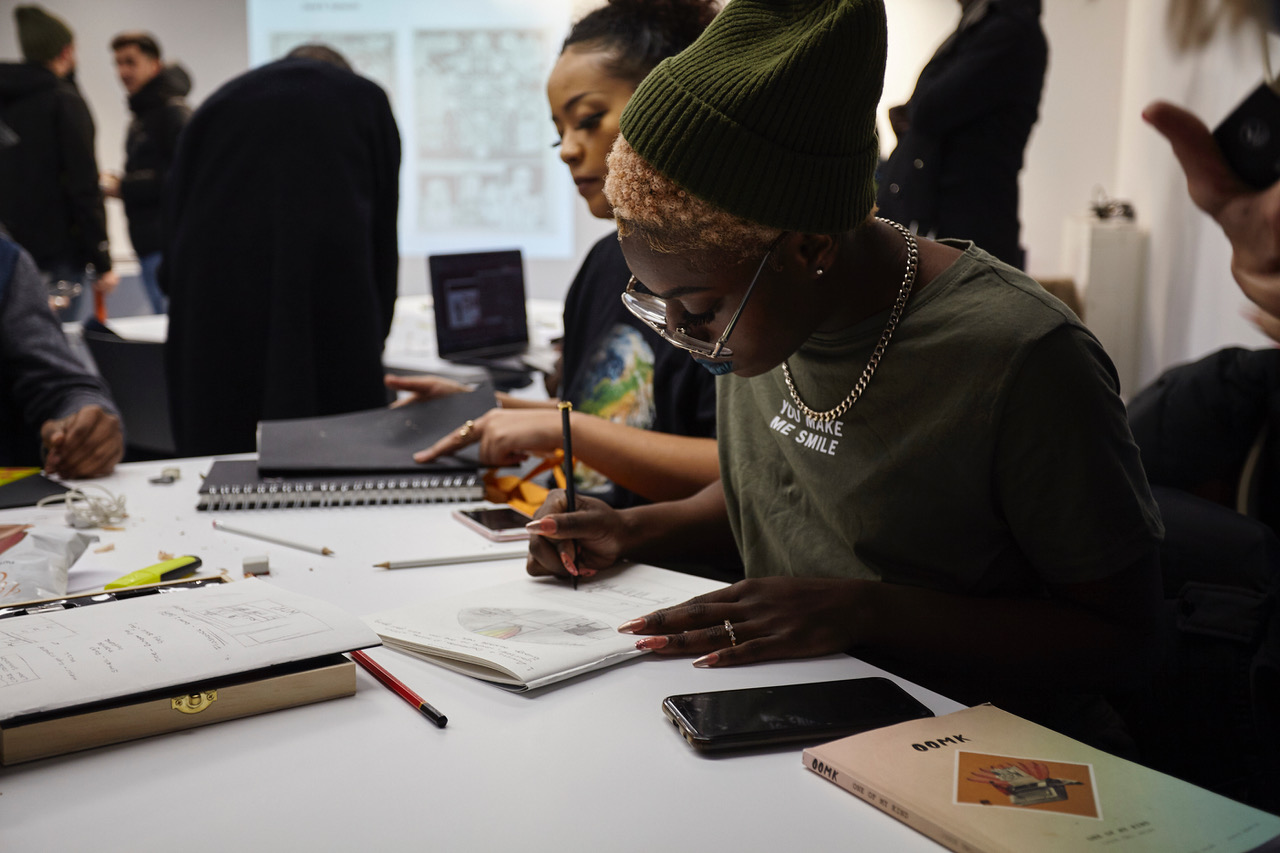
Authors working on The Book of Homelessness/Courtesy of Accumulate

I love graphic novels and I love stories told by the people who are experiencing them, so this is my kind of book.

The Book of Homelessness, recently published in the UK, shares the life stories of people affected by homelessness through their own drawings, texts, poetry and photography. Their stories are personal, emotional, raw and honest. They talk about pain, abuse and dysfunction, about families, war, rejection and misplaced love, and  about overcoming difficulties and fighting and succeeding. 


By telling their own stories in the form they wanted to tell them, the authors hope to show the complexities of homelessness and what causes it – and perhaps help change perceptions around homelessness.
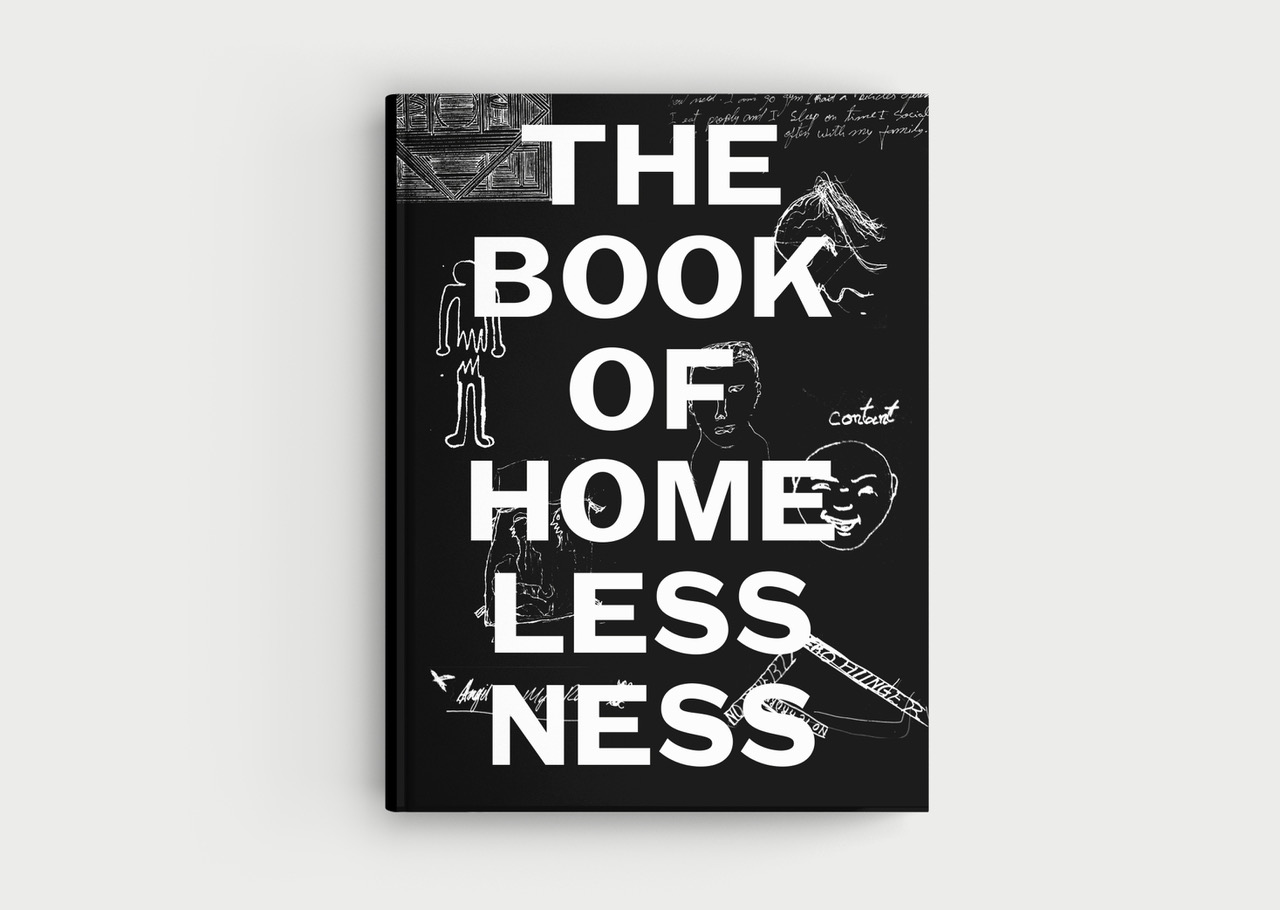
 The project is the brainchild of Marice Cumber, founder of youth homelessness charity Accumulate, which describes itself as “the art school of the homeless”.

The charity encourages young homeless people’s creativity through courses on fashion, photography, sculpture, graphic design and more. They also hold exhibitions and source funding to send really talented individuals to arts college. (So far, they’ve sent 20 to arts college).

Accumulate launched a crowdfunding initiative for the book two years ago, and creative workshops with the participants – who were all living in hostels, shelters or temporary accommodation – started last January.

Samantha Morton, herself previously homeless, has written an intro to the book entitled “How homelessness shaped my life”, and Colin Firth has said about it: "This is a remarkable collection in any context. The fact that these beautiful, personal works are the expressions of our neighbours who are homeless makes it untenable to ignore them ever again."

All profits from The Book of Homelessness are shared with its authors and Accumulate so it can continue to provide creative workshops for people who are homeless.

Please visit Accumulate to purchase a copy of the book (£25)

Tuesday, 15 October 2019

Symbols of Humanity: Syrian artist bridges times, religions


In our divided and polarised world, who, but artists, can conjure up the possibility of coexistence between cultures, ethnic groups and religions?

Born in 1966 in Aleppo, George Baylouni fled to France during the war.  And now his work builds bridges between the East and the West, and the past and the present.

Fascinated by the ancient civilisations of Mesopotamia, he studied their mysterious artefacts and texts, written in ancient cuneiform. He paints religious symbols and makes collages, adding gold leaf, his trademark, telling a tale of ancient worlds and of contemporary times. Uniquely, his paintings combine religions, with several pieces focusing on both Christianity and Islam in the same painting.

His work has been showcased prominently in the Middle East and Europe and he was named one of the 100 most important personalities in the Arab world in 2014 by Arabian Business Magazine.

”Symbols of Humanity”, Baylouni’s first exhibition in London, opens at the Stories Art Gallery in Mayfair on October 17 and runs until November 17. 

Baylouni's exhibition marks the first anniversary of Stories Art Gallery, which features renowned and upcoming artists from around the world, many from war-torn countries, and focuses on the stories behind their artwork.

If you have a chance, do see the exhibition and meet gallery director, the wonderful Manas Ghanem, who was born in Damascus, then educated in the West. Before opening her gallery, she worked as a lawyer in the Middle East and North Africa with UNHCR and Unicef.  


Friday, 23 August 2019

Extinction Rebellion Art and Design at the V&A


Extinction Rebellion posters. Photo credit: Chris J Ratcliffe Getty Images


Protest movements have always used art to carry and amplify their messages. The Climate and Ecological emergency is THE issue of our time, and the Extinction Rebellion (XR) movement is skillfully using art and design to galvanise public concern for the planet with maximum impact. Their flags, banners and flyers in punchy colours with carefully worded slogans and woodblock prints are now immediately recognisable across the globe.

Extinction Rebellion, as many might already know, is a global activist group calling for urgent action on climate change through acts of non-violent civil disobedience and disruption. Since its first public action on 31 October 2018, urging the UK government to declare a climate and ecological emergency and commit to reduce emissions to net zero by 2025, XR has grown into an international movement with over 363 groups active in 59 countries around the world.

XR’s graphics balance joy and menace with a bold, tongue-in-cheek approach, and are characterised by four core design elements. These include the use of the Extinction Symbol, the XR logotype, a colour-palette of 12 playful tones including ‘Lemon’ yellow and ‘Angry’ pink influenced by pop artist Eduardo Paolozzi, and the fonts ‘FUCXED’ and ‘Crimson’. Often juxtaposing imagery of the natural world with more sinister images of skulls and bones, XR’s urgent visuals articulate hope, while outlining the grave consequences the group feels failure to act will bring. 

Recognizing the importance of the movement and the value of its unique designs, the London V&A has acquired a series of objects exploring the design identity of Extinction Rebellion.

The pieces produced by the Extinction Rebellion Arts Group, a coalition of graphic designers, artists and activists responsible for XR’s Design Programme, range from the open-source Extinction Symbol created by street artist ESP in 2011 and adopted by XR in 2018, to the Declaration that accompanied their first act of Rebellion, and flags carried during mass demonstrations. They are on display in the V&A’s Rapid Response Collecting Gallery (gallery 74a).

The objects have been acquired through the V&A’s Rapid Response Collecting, an innovative programme that enables the acquisition and immediate display of design objects that address questions of social, political, technological and economic change.

“Design has been key to Extinction Rebellion’s demands for urgent action on climate change. The strong graphic impact of the Extinction Symbol alongside a clear set of design principles have ensured that their acts of rebellion are immediately recognisable,” says Corinna Gardner, Senior Curator of Design and Digital at the V&A.

“Extinction Rebellion have galvanised public concern for the planet, and their design approach stands in relation to earlier protest movements such as the Suffragettes who encouraged the wearing of purple, green and white to visually communicate their cause.”

Thursday, 14 February 2019

Stories From Within – Syrian artists tell stories of survival, resilience


Human Bull I by Bassem Dahdouh/courtesy of Stories Art Gallery

When four internationally renowned Syrian artists were asked to contribute pieces showing what they wanted the West to see about their country, they selected artworks representing the untold stories of ordinary people who have endured and persevered through extraordinary circumstances.

Their work form  “Stories from Within”, a fascinating exhibition on display at Stories Art Gallery in London’s Mayfair until February 25. The gallery opened last October with the aim of promoting current Syrian artists whose work challenges their country’s one-dimensional image presented in the media. All the “Stories From Within” pieces were created in Syria over the past seven (almost eight) years and it is the first time since the war that they are exhibited in Europe.

 “We look for works that widen our vision and shift the image of Syria from refugees and needy victims to be pitied to one of humanity and respect – one with whom the viewers can have a connection,” says Manas Ghanem, the gallery’s director.  


 “Yes, there is war, destruction and darkness, but you cannot reduce Syria’s 7000 years of existence to seven years of war.  Syria is still alive,” adds Ghanem, who was born in Damascus, but educated in the West. Before opening her gallery, she worked as a lawyer in the Middle East and North Africa with UNHCR and Unicef.   


Bassem Dahdouh’s mixed media on canvas “humanoid bull” series depicts hybrid beings who are neither fully human nor beast.  The humanoid bull “portrays us, oppressed when reaching out for a breath of fresh air in an attempt to lead normal lives," he explains.  "It is my hope that we as humanity would succeed and plant some kindness and compassion in this land before it is too late."


Nizar Sabour’s work reflects the emotional impact of the war on the sacred Aramaic town of Maloula, where people still speak the dialect of the Christ and which was ravaged by jihadists linked to Al-Qaeda in 2013.  Never before had this ancient mountain town been harmed.  His five mixed media canvases represent various views of Maloula and the surrounding Qalamoun mountains, some surrounded by protecting lace, guardian angels and saints or official-looking stamps.


The works of the other artists in the exhibition - Edward Shahda and Asmaa Fayoumi - depict the anxiety of those left behind while waiting for the unknown, and finally also hope, love and compassion, which is what allows people to survive.

People don’t easily associate art and Syria, says Ghanem, but the Syrian art scene has been vivid since the 50s and the 60s, and many of the artists exhibited in the gallery are renowned in the world of contemporary art, including Sabour, Shahda, Dahdouh and Fayoumi, who have works in private collections and galleries from USA to Russia, as well as in Arabic countries like UAE, Kuwait and Lebanon.

“Yet for the past eight years, it’s as if that has just gone, and all that you hear about Syria is different. So we are trying to bring it back,” Ghanem says.

The gallery’s next projects include an Arabic calligraphy exhibition by the famous Syrian artist Mounier Al-Sharaani. They also hope to be able to bring artworks from Iraq, Yemen and other countries. 


Stories From Within at the Stories Art Gallery  until February 25. 
51/53    South    Audley    Street Mayfair London W1J 7DD

Friday, 15 June 2018

Another Day in Baghdad – Iraqi women tell their stories


Maysoon Pachachi and crew members


A couple of weeks ago, I went to a wonderful event at the Royal Court Theatre in London: a fundraiser for “Another Day in Baghdad”, a film, which tells the story of post-invasion Iraq from a women’s perspective and that of ordinary citizens. It is the first ever-Iraqi feature film authored by Iraqi women - and it unites cast and crew from the Middle East and Europe.


The fundraiser started with a short documentary about the recent test shoot (which you can view here), followed by a reading of part of the film’ script by 14 actors, including, to my delight, the mesmerizing Ben Whishaw and Lizzie Wells (Matilda The Musical).   

I was deeply moved by the script, but also the aim of the film and the way it is being developed – and since they still need to raise £19,600 in order to be able to film in Iraq and support Iraqi talent, I wanted to help spread the word.
 
“Another Day in Baghdad” is based on journal notes and the real life experiences of the two female authors - Irada Al Jabbouri, a Baghdad-based novelist, and Maysoon Pachachi, a London-based filmmaker of Iraqi origin.  The film tells the intersecting stories of ordinary citizens, unfolding in the last week of 2006 in Baghdad. All the characters are Iraqi and many are strong female ones.  

“The time of extreme sectarian violence in which our story takes place foreshadows what is happening in Iraq and the Middle East at the moment,” says Pachachi. “We feel that in the context of the extreme militarized male violence we are seeing in the Middle East, it is crucial to have stories told from a female perspective.

 “These stories are absent in the media and absent from the conscience of the world. Iraq has been presented for decades as a source of evil and cruelty and a threat to its neighbours and the world,” Pachachi adds.  “We feel that it’s especially important now for stories of individual resistance and hope to be told about the area, where so many still maintain solidarity with one another as human beings, in spite of the intensely divisive pressures of religion and politics, with which they are living.”

Co-written by Pachachi and Al Jabbouri, the script won the IWC Schaffhausen Script Award – presented by Cate Blanchett in 2012.

Pachachi and Al Jabbouri have secured the funding needed for filming in Jordan, as well as for the post-production of the film in Europe, but are now raising funds to shoot in Baghdad - where the light and the river are irreplaceable - and hire Iraqi cast and crew.  Part of the film will also be shot in Jordan with Iraqi refugee actors.  

“For Iraqis inside and outside Iraq, opportunities to shape their own narratives – far from Hollywood-style fiction and newscasts – are limited. Through this film, we aim to generate an authentic and meaningful opportunity for Iraqi actors and filmmakers." Pachachi says.

In 2004, she co-founded a free film-training centre in Baghdad and has taught film directing and editing in Britain and Palestine. 

If you want to support this project, you can contribute here.


Wednesday, 28 February 2018

The kindness of strangers: exhibition celebrating solidarity towards refugees

Museum With A Home at the School Life and Education Museum in Athens


I’ve been working with Oxfam on a story celebrating the kindness and solidarity of ordinary people towards the men, women and children who are seeking peace and sanctuary in Europe.

It’s a story of the Museum Without A Home, a touring exhibition showcasing every-day objects that ordinary people have donated to refugees to make them feel more welcome. 

I loved this project: it’s such a creative and beautiful way to remind people that refugees are people like us, to celebrate those who are trying to make them feel a bit more at home in their host countries – and to encourage other people and governments to follow suit and support dignity and safety for all.

After touring in various cities across Europe, including Leicester and Cambridge, the exhibition was supposed to come to London and be displayed at City Hall and Parliament, then move on to Oxford and Cardiff. But because of the sex scandal which engulfed Oxfam, the plans had to be cancelled. Oxfam was hoping for lots of media coverage and support from MPs, NGOs and members of the public. It was not to be. But Positive News still agreed to run a short piece on it and I wanted to tell a bit about the Museum here too:

A cooking pot, a pair of running shoes, coloured crayons, a skipping rope. These are some of the everyday objects that have been ‘exhibited’ in the Museum Without A Home. The touring exhibition, which can be viewed online here, celebrates acts of kindness by ordinary people towards the men, women and children who are seeking peace and sanctuary in Europe. 

The museum was originally created by the Greek section of Amnesty International and Oxfam to acknowledge the solidarity of the Greek people towards refugees. Organisers also hope to call on people – including political leaders – worldwide to support dignity and safety for all.

In autumn of 2016, the entire city of Athens was transformed into a  “museum” showcasing real objects that residents donated to refugees to make them feel welcome. Each object was accompanied by personal testimonies of the people who donated the objects and the people who received them.

Next to the photo of a board game reads the caption: “Stelios lives in Piraeus. When his school teacher proposed to the class to collect toys for the kids in the port of Piraeus, Stelios offered one of his favourite board games. He then found out that the game had reached the hands of Ishmael, a boy his age.”

Accompanying an image of a kettle reads the caption: “Vasso lives and works in Konitsa. Mafida from Syria is being hosted in the same region. When the two women met, Vasso offered a water kettle to Mafida so that she can easily heat water to wash her baby.”

Since 2016, the exhibition has travelled to Belfast, New York, Belgrade and Canada, as well as Leicester and Cambridge. Since it came to the UK, organisers displayed alongside the Greek objects several items that have been donated by the British public. Among them were a cooking pot and a quilt sewn by people from Witney, Oxfordshire, who hope to sponsor a family from Syria.

“This is a celebration of small acts of welcome and generosity, that make all the difference to refugees as they rebuild their lives in the UK,” said Sally Copley, Oxfam’s head of policy, programmes and campaigns. “We are calling on the government to extend its own hand of welcome by allowing refugees to reunite with their families in the UK.”


Wednesday, 11 October 2017

Refugee Exhibition: "Claiming a New Place on Earth"


If you are in London this week, please come and see our exhibition “Claiming a New Place on Earth” at Protein Studios in Shoreditch, London.  Through photographs and interviews, photographer Caroline Irby and I have recorded the journey of 10 refugees or asylum seekers aged 18-24, who arrived in the UK as minors and are now coming of age in this country. 

How is it to grow up in an Afghan village with no water and no electricity, then to find yourself alone in London at 18, not speaking a word of English?

How does it feel when life is passing you by, when you cannot get your driving license, go to university or get a job because you are waiting for your papers?


Thousands of teenagers arrive in the UK every year seeking asylum. Many have missed out on education and have been scarred by war and by having to leave their home countries.  In the UK, they have to navigate complex systems to get the support they need. Yet, they are also young people with talent, pride, aspirations and dreams.


The young refugees are from Syria, Ivory Coast, Iran, Afghanistan, Nigeria, Pakistan, Ukraine and Uganda. They talk about the life they have left behind and their new experiences in this country - the hurdles and challenges they are facing, especially around the asylum and education systems - as well as their dreams and aspirations for the future.  They were photographed in the context of their dream job. 


The portraits and interviews are part of the exhibition “Claiming a New Place on Earth” at Protein Studios in London, Oct. 10-15 (the title is from Lesbos 2015  by poet Ruth Padel). The exhibition was commissioned and curated by Breaking Barriers (BB), a wonderful charity helping refugees to find meaningful employment.

Caroline and I have worked together on a number of humanitarian stories overseas – particularly in Africa and Asia - and in the UK.   We have a keen interest in refugee issues because we have seen some of the causes that trigger people to flee their homes. We wanted to meet some of the young refugees who have settled here to learn what propelled them to move so far, and to hear about their experiences of trying to make a new life here.  And, at a time when Brexit negotiations are pressing on and immigration is such a loaded topic, we wanted to let some young refugees tell their own stories in their own words.

This is our second collaboration with Breaking Barriers. Last year, Breaking Barriers’ exhibition portrayed refugees at the place where they first felt free or safe in the UK.

You can see some of the portraits and interviews in this Guardian article


Sunday, 10 July 2016

Freedom is not easy - exhibition of refugees who found safety in London


Hodan Omar from Somalia/Credit: Caroline Irby @carolineirby


If you are in London July 12-18, come and see “Freedom is not easy” - an exhibition of portraits and interviews of refugees living in London. My friend photographer Caroline Irby represented 12 refugees in the various places where they first felt free or safe after arriving in this city. The portraits are accompanied by interviews I’ve made, capturing their stories of flight, readjustment to a new life, as well as the moment each refugee first felt safe or at home here.
There are an estimated 120,000 refugees in the UK, and last year some 32,414 applied for asylum. For most, life is not easy. Unemployment in refugee communities is above 50% (5.1% is the national average), and in 2015, the British Red Cross supported more than 9,000 who were destitute. Yet some keep striving and pulling through, and successfully make new lives here.
 

Caroline and I have worked together on a number of humanitarian stories overseas and in the UK. We have travelled widely with our work, particularly in Africa and Asia where we have seen some of the causes that trigger people to flee their homes, and visited the camps where refugees and displaced people find shelter - usually in their own countries or in neighbouring states. But some refugees move further: some cross the Sahara, the Mediterranean and the Channel, and now live here in London.

We wanted to meet some of the refugees who have settled here, to learn what propels them to move so far, and to hear about their experiences of seeking - and sometimes finding - freedom, safety and a home in this city.
At a time when politicians and the media too often dehumanise refugees by referring to them as an anonymous mass, we wanted in our small way to restore some of their identities by giving these 12 refugees a face and a voice. We also wanted to show how strong and resilient refugees have to be in order to make it here. The men and women featured in the exhibition also demonstrate that if they require some help to settle in the country, they also bring fresh energy, knowledge, talent and tremendous potential.
 

We also wanted to support Breaking Barriers, the charity which is putting together this exhibition. They are helping refugees to find meaningful employment, matching their skills. So many refugees told us that finding a "real" job was one of the main factors that helped them integrate and feel at home.
 

Here is what Hodan Omar, a young woman from Somalia, told us about the internship she found through Breaking Barriers:

"As a refugee, all you hear is negative: everything seems to conspire to put you down, so you think that maybe they are telling the truth, that you are never going to make it. But at Source8, I felt positive. They made me feel at ease. They trusted me with important things. I felt capable. It freed me of that negative cloud. Yesterday was my last day there, but I’ve gained skills, experience and confidence. Now, I am hopeful I can find a good job."


Some of the portraits/stories in this exhibition are featured in the summer issue of Positive News magazine and on their website. You can read them here.
 

“Freedom is not easy” at the Archivist's Gallery, 2-10 Hertford Road, London N1 5ET, 11-18th July 2016 from 10 am to 6pm.


Saturday, 31 October 2015

Gallery Olympe de Gouges in Paris honours women's rights pioneer


Olympe de Gouges Gallery/credit: Veronique Mistiaen


“DECLARATION OF THE RIGHTS OF WOMAN AND THE FEMALE CITIZEN” 

These red letters  (in French) on a large poster in the window of the new art gallery rue de l’Odéon in Paris 6th stopped me in my tracks.

I read the poster: it was about an avant-garde woman who cherished freedom and opposed discrimination, violence and oppression in all its forms.  And she wrote the remarkable “Declaration of the rights of woman and the female citizen” in 1791. Her name was Olympe de Gouges.   I am ashamed to say that I didn’t know her.

Intrigued, I stepped inside. The lovely gallery’s manager, Victoria Otero, told me that Olympe de Gouges was a political activist and one of France’s first feminists. Although she was born in a modest family, she found her political voice by writing an astonishing number of pamphlets and posters that she freely disseminated around Paris.  Her pamphlets promoted bold, new ideas, such a total equality between sexes, female emancipation and abolition of the death penalty and slavery.  Ahead of her time, she was guillotined for her ideas in 1793.

The Olympe de Gouges gallery was conceived by a French entrepreneur whose offices were in the old building where Olympe de Gouges lived - on Servandoni street near St Sulpice Church, in the heart of the historic 6th arrondissement. To pay tribute to her,  he not only placed a commemorative plaque on the façade of his building, but decided to open an art gallery a few steps away. 

Olympe de Gouges's house/credit: Veronique Mistiaen

New in the golden triangle of Parisian galleries, the gallery Olympe de Gouges wants to “reinstate Olympe de Gouges,  talk about this woman too avant-garde for her time and pay tribute to her strength and convictions,” says Otero.

The gallery features artists who, like Olympe de Gouges, have a critical view on our contemporary world, fight against all forms of inequality and are not afraid to take risks.  As the art market tends to favour men, they also want to provide a space for women artists.  Exhibitions change monthly, which allows the gallery to showcase a wide variety of artists from all over the world.

Until November 11, the gallery featured the Sino-Irish artist Mia Funk. One of her most famous – and controversial – piece, "An Audience with the Queen" (Price Thames and Hudson 2010),  shows the British monarch and Lucian Freud seated naked on a couch sipping tea and eating Pot Noodles.  The work was meant to be exhibited in Dublin for the Queen’s first state visit, but  had to be quickly taken down following protests.

Their November exhibition will focus on immigration with Marc Bellini, a French photographer artist of Corsican origin, who through herbarium photograms traces the routes of migrants to Europe.


Saturday, 20 June 2015

Another Day Lost - Mapping Syrian Refugee Camps


Another Day Lost: 1,579 days and counting.../Installation by Issam Kourbaj
        
 
If you live in London, make sure to see the haunting installations by my friend, Syrian-born, Cambridge-based artist Issam Kourbaj, evoking the plight of his fellow Syrians in refugee camps scattered all over Syria and neighbouring countries. The installations are part of London-wide festival, Shubbak: A Window on Contemporary Arab Culture, between 11th July and 26th July. 

Taking the title of a Fairouz song, these five installations by Kourbaj are inspired by and based upon refugee camps. Each installation is constructed from imagined camp waste products, such as educational material, books and medical packaging, and is encircled with a fence of 1,579 burnt matches. The matches, which increase in number over the course of the exhibition, count the irretrievable days since the Syrian uprising (15th March 2011).

Another Day Lost: 1,579 days and counting.../Installation by Issam Kourbaj

By repurposing discarded materials and extinguished matches, Kourbaj laments not only the loss of time, normality and everyday life for Syrians everywhere, but also the poor quality of life experienced by his compatriots in their displacement. The installations are scattered around central London, in a pattern that loosely relates to the diaspora of refugee camps that have arisen in the countries bordering Syria over the last four years.

" I am counting the days since the uprising; it is more than 1500 days and I am still counting. My homeland, 'the country formerly known as Syria'* is torn apart; its cities are turned to dust, millions of my fellow Syrian families, women and children are daily forced to flee this largest humanitarian crisis in the world.

Though life continues in refugee camps throughout the region, with the help of many generous organisations such as UNHCR and MSF and others, the displaced millions now bear a lasting trail of visible and invisible scars caused by the conflict, the separation from their homeland and the scars of permanent loss.
Over the last four years, I have witnessed from this painful distance the way these vulnerable human beings are waiting in makeshift shelters they call home, and I fear for their lives are on hold and many are becoming citizens of a tent. "

Kourbaj was born in Syria and studied art in Damascus and St Petersburg, before settling in the UK. He currently teaches at the University of Cambridge, where he is Lector at Christ's College. Since the 2011 revolution, Kourbaj has been making work based on the horrors of the war in Syria, raising awareness and money for projects and aid in Syria.

The catalogue of Another Day Lost is on sale at each location, with contributions by Nabil Almulhem, Paul Connerton, Tarek Fustok, Kevin Hart, Martin Johnson, Tim Knox, Issam Kourbaj, Louisa Macmillan, Polly Markandya, Bill Norris, Eva Schmitt, Eckhard Thiemann, Laurence Topham, Gonzalo Vargas Llosa and Lucy Winkett. Proceeds will go to MSF and UNHCR. You can also donate to these charities directly, as well as to preorder artworks to be made out of these installations after the exhibition finishes.


 *As described in The Economist, "Syria's civil war: The country formerly known as Syria" (23rd February, 2013).  


Another Day Lost: 1,579 days and counting.../Installation by Issam Kourbaj

Conversation with the artist St James's Church, Piccadilly Wednesday 22nd July 6:30–7:30pm Issam Kourbaj in conversation with curator Louisa Macmillan at St James's Church, Piccadilly (free, no booking required, donations most welcome)
St James's Day celebrations St James's Church, Piccadilly Sunday 26th Julyfrom 1pm Members of the public are invited to join in the deinstallation of one of the camps, with opportunity to buy some of the artworks, as part of the St James's Day celebrations at St James's Church

LOCATIONS
St James's Church
197 Piccadilly, London W1J 9LL Mon–Sat 9am–6pm. Sun 1–6pm
10 Golborne Road
10 Golborne Road, London W10 5PE Mon–Sun 10am–6pm
Goethe-Institut London
50 Princes Gate, Exhibition Road, SW7 2PH Mon–Fri 8:30am–7pm. Sat8:30am–5pm
Heath Street Baptist Church
84 Heath Street, London NW3 1DN Mon–Sun 10am–6pm
Central Books
99 Wallis Road, London E9 5LN Mon–Fri 9am–5pm. Sat 11th July 9am–5pm


-->Supported by: Goethe Institute, St James's Church Piccadilly, Heath Street Baptist Church, Central Books, Cambridge School of Visual & Performing Arts
 

Friday, 19 June 2015

The dark side of Michelangelo’s white marble


Credit: Andrea Ribolini


--> I had never seen anything like this: from the air, the marble mountains in the three valleys of Torano, Miseglia and Colonnata around Carrara in Tuscany look as though they are covered in snow. From close up, the high vertical faces and giant benches of the open cast excavations look like gigantic white cathedrals in a moonscape. This is the world’s largest marble field, formed in the Apuan Alps over 200 million years.  It is breath-taking. 

The marble mountains have been mined continuously since the Roman times: they provide the whitest and most sought-after marble in the world.  Michelangelo selected stones for his iconic David and Pietà statues there, and countless of other artists across centuries and continents have been bewitched by this stone. The cathedrals of Florence and Siena, St Petersburg’s Hermitage museum, the Marble Arch in London and Washington’s Kennedy Centre are all made from this celebrated marble.

For centuries, the marble has been the backbone of the region’s economy and its pride.  But now, globalisation, market forces and new excavation techniques have turned into a curse. An irreplaceable stone is being undersold, most of the small workshops where marble was carved have disappeared, a rare craft is dying and the environment is wrecked. 

Credit: Andrea Ribolini
 

Credit: Veronique Mistiaen
This is a business with a yearly turnover of between €700 and €800 millions, but the only beneficiaries are a few powerful families and businesses, while the town is blighted by the side effects of excavation – especially the dust and flooding. Despite its extraordinary natural resources, Carrara, a town of 66,000 inhabitants, is one of the poorest in Tuscany and one of the most heavily indebted in the country.

You can see the story I wrote with Chiara Briganti, an academic, painter and native of Carrara, for Newsweek here.

It was a slippery and complex story, which took us several years to research. It was nearly impossible to find official figures on basic facts such as the number of people working in the quarries and marble industry, the volume of excavation, the value of the stone and so on. The more we learned, the murkier the story seemed to become. It felt like all information around the marble industry was kept as nebulous as possible, so people wouldn’t look too closely. And as locals say, “when someone doesn’t want you to look too closely, it’s usually because the mafia is involved.”

Credit: Andrea Ribolini

During the few years we reported on the story, we could clearly see the terrible toll mining was exacting on the mountains: peaks were chopped off (although quarrying is prohibited above 1,200m), the shape of the mountains irreversibly altered, the water sources contaminated, the river white and swollen with marble debris.

As an outsider, it was hard to understand why the city allowed this level of reckless excavation to happen and why citizens didn’t  boot them out of office. Everyone I asked, always replied: “This is Italy” – meaning that a combination of corruption, inertia, respect for traditions and fear of the marble barons and the mafia maintained the status quo.

Lately, though, a growing number of locals, environmental groups, academics and artists have united under the banner of “Salviamo le Apuane”  (Save the Apuan Alps), organizing rallies, petitions and demonstrations – and they are gaining momentum.  But whenever they seem to be achieving some success, it is taken away…