Showing posts with label Oxfam. Show all posts

Friday, 1 February 2019

Thousands of Migrants Have Died in ‘Watery Graveyard’ despite Libya Deal


Personal clothing and items left behind by migrants who travelled by boat from Libya to Sicily.  Credit: Alessandro Rota/Oxfam


Two years on from Italy’s EU-backed migration deal with Libya, more than 5,300 people have drowned in the Mediterranean and thousands more still are suffering in Libyan detention camps – and EU governments are complicit in this tragedy.

 “EU countries are making the Mediterranean a watery graveyard as a matter of deliberate policy,” said Oxfam’s EU migration policy advisor, Raphael Shilhav. “They must allow search and rescue ships to dock in their ports, disembark rescued people, and return to sea to save people’s lives, in line with international law. All attempts to prevent their work will inevitably lead to more deaths and run counter to Europe’s humanitarian values.”

In an open letter to EU governments, more than 50 organisations including Oxfam said EU governments have become complicit in the tragedy unfolding before their eyes in the Mediterranean. People are now in even more danger at sea and are being returned by the Libyan coastguard to face sexual abuse, slavery and other human rights abuses in Libya. 

The Libya deal, signed on 2 February 2017, provides money and technical support from Italy and the EU to the Libyan coastguard, in return for the coastguard preventing people from leaving Libya for Europe.

The open letter says that some EU member states have deliberately forced the organisations conducting search and rescue operations to stop their life-saving work. It also accuses governments of making unfounded allegations against ships operating in the Mediterranean and preventing them from leaving their ports. This time last year there were five organisations conducting search and rescue operations – now there is only one.

Since the Libya deal was struck, more than 5,300 people have drowned in the Mediterranean including over 4,000 people on the central route closest to Libya, making it the deadliest sea in the world. 

In 2018, the Libyan coastguard intercepted more than 15,000 people and returned them to Libya. Currently, 6,400 people are known to be held in official detention sites in Libya, with many more in other centres, some of which are run by armed groups. According to the UN, even “official” centres can be run by people smugglers and traffickers, despite the EU’s commitment to combat human trafficking.  

Numerous accounts collected by Oxfam and its partners in recent years show that people in Libya are often crammed into detention centres in abandoned buildings or pitch black tunnels, without enough food. Many are mistreated before being sold to armed groups or as slaves. 

Yonas (not his real name), a 28-year-old man from Eritrea, said he was detained by various gangs in Libya: “Altogether, I lived a year and a half in two prisons, where we were all living in terrible conditions, with many people getting sick and not receiving care. Many died and were buried like animals. The women were raped in front of us. We were beaten every day by prison guards selected from the group of migrants … They beat us and made us call our family to ask them to send us money.”

Ibrahim (also an alias), a 26-year-old man from Guinea, said he was kidnapped by a gang in Tripoli. He described how the gang members would deceive UN personnel who came to the detention centre where he was held: “On the days when UN staff came they treated us well, cleaned everything, cooked good food, brought us clothes, brought us to a doctor for check-ups. As soon as the UN staff had left, things changed immediately. They took everything they had given us: food, clothes, soap.”

Oxfam and the other signatories to the open letter are calling on EU governments to stop sending people rescued at sea back to Libya. The organisations say that EU member states need to be prepared to suspend cooperation with the Libyan coastguard if issues like arbitrary detention are not dealt with. EU governments should also support search and rescue operations and ensure that people rescued at sea can arrive safely and without delay to Europe. 


Thursday, 20 December 2018

A Taste of Home - When meals in refugee camps mean more than food


A hot meal in a refugee camp is always welcome, but in Obrenovac and other refugee camps in Serbia, a meal is also a portal to the home and loved ones left behind by the refugees and migrants who live in limbo in camps.

“Kookoo Sibzamini [potato patties] is what I had in my backpack when I left home. My sister made them for me for the road. I told myself I need to save them for later when it gets tough. But I ate them all. I don’t think they even got cold,” says Mohsen from Iran.

Moshen’s favourite dish is one of seven popular healthy, homely recipes cooked in refugee camps in Serbia, which were provided by the refugees themselves.  Oxfam, which is serving meals at the Obrenovac camp 30km south-west of the capital Belgrade, along with Care and CaritasEuropa, had run a survey asking refugees and migrants what they wanted to eat.  The refugees came up with a lot of suggestions, but many also offered recipes from their own countries. Now, instead of the usual breaded fish and vegetable curry, Obrenovac and several other camps are serving traditional dishes from Afghanistan, Syria, India, Iran and Pakistan.

Oxfam asked an illustrator to make colourful and easy to read recipe cards for seven of the recipes. The cards also include recollections from some of the refugees: where the recipe came from, who first cooked it for them, the last time they ate it, etc.  For example, Gjulan from India (Kashmir) says that the smell of Gajar Matar ki Sabzi, a spicy stew now cooked at the camps, instantly transports him home. “When me and my brothers would come back from school my mother would be by the stove cooking the stew, dancing along with the music from TV. In my mind, it is still like this back home: music ad the smells of cooking.”

“Refugees’ life is hard,” says Ali who came from Pakistan, “but when I sit with people and eat at the dinner table, I am very happy.”

Most refugees in the camps have been in Serbia for over a year and have attempted to cross the border into neighbouring countries such as Bosnia, Croatia, Bulgaria and Hungary - and been turned back. They are trying to reach other countries in Europe, either to claim asylum, reunite with family members or to find work.

In 2017, there were nearly 4,000 migrants in Serbia, of which 89% are housed in camps.


Wednesday, 28 February 2018

The kindness of strangers: exhibition celebrating solidarity towards refugees

Museum With A Home at the School Life and Education Museum in Athens


I’ve been working with Oxfam on a story celebrating the kindness and solidarity of ordinary people towards the men, women and children who are seeking peace and sanctuary in Europe.

It’s a story of the Museum Without A Home, a touring exhibition showcasing every-day objects that ordinary people have donated to refugees to make them feel more welcome. 

I loved this project: it’s such a creative and beautiful way to remind people that refugees are people like us, to celebrate those who are trying to make them feel a bit more at home in their host countries – and to encourage other people and governments to follow suit and support dignity and safety for all.

After touring in various cities across Europe, including Leicester and Cambridge, the exhibition was supposed to come to London and be displayed at City Hall and Parliament, then move on to Oxford and Cardiff. But because of the sex scandal which engulfed Oxfam, the plans had to be cancelled. Oxfam was hoping for lots of media coverage and support from MPs, NGOs and members of the public. It was not to be. But Positive News still agreed to run a short piece on it and I wanted to tell a bit about the Museum here too:

A cooking pot, a pair of running shoes, coloured crayons, a skipping rope. These are some of the everyday objects that have been ‘exhibited’ in the Museum Without A Home. The touring exhibition, which can be viewed online here, celebrates acts of kindness by ordinary people towards the men, women and children who are seeking peace and sanctuary in Europe. 

The museum was originally created by the Greek section of Amnesty International and Oxfam to acknowledge the solidarity of the Greek people towards refugees. Organisers also hope to call on people – including political leaders – worldwide to support dignity and safety for all.

In autumn of 2016, the entire city of Athens was transformed into a  “museum” showcasing real objects that residents donated to refugees to make them feel welcome. Each object was accompanied by personal testimonies of the people who donated the objects and the people who received them.

Next to the photo of a board game reads the caption: “Stelios lives in Piraeus. When his school teacher proposed to the class to collect toys for the kids in the port of Piraeus, Stelios offered one of his favourite board games. He then found out that the game had reached the hands of Ishmael, a boy his age.”

Accompanying an image of a kettle reads the caption: “Vasso lives and works in Konitsa. Mafida from Syria is being hosted in the same region. When the two women met, Vasso offered a water kettle to Mafida so that she can easily heat water to wash her baby.”

Since 2016, the exhibition has travelled to Belfast, New York, Belgrade and Canada, as well as Leicester and Cambridge. Since it came to the UK, organisers displayed alongside the Greek objects several items that have been donated by the British public. Among them were a cooking pot and a quilt sewn by people from Witney, Oxfordshire, who hope to sponsor a family from Syria.

“This is a celebration of small acts of welcome and generosity, that make all the difference to refugees as they rebuild their lives in the UK,” said Sally Copley, Oxfam’s head of policy, programmes and campaigns. “We are calling on the government to extend its own hand of welcome by allowing refugees to reunite with their families in the UK.”


Thursday, 30 June 2016

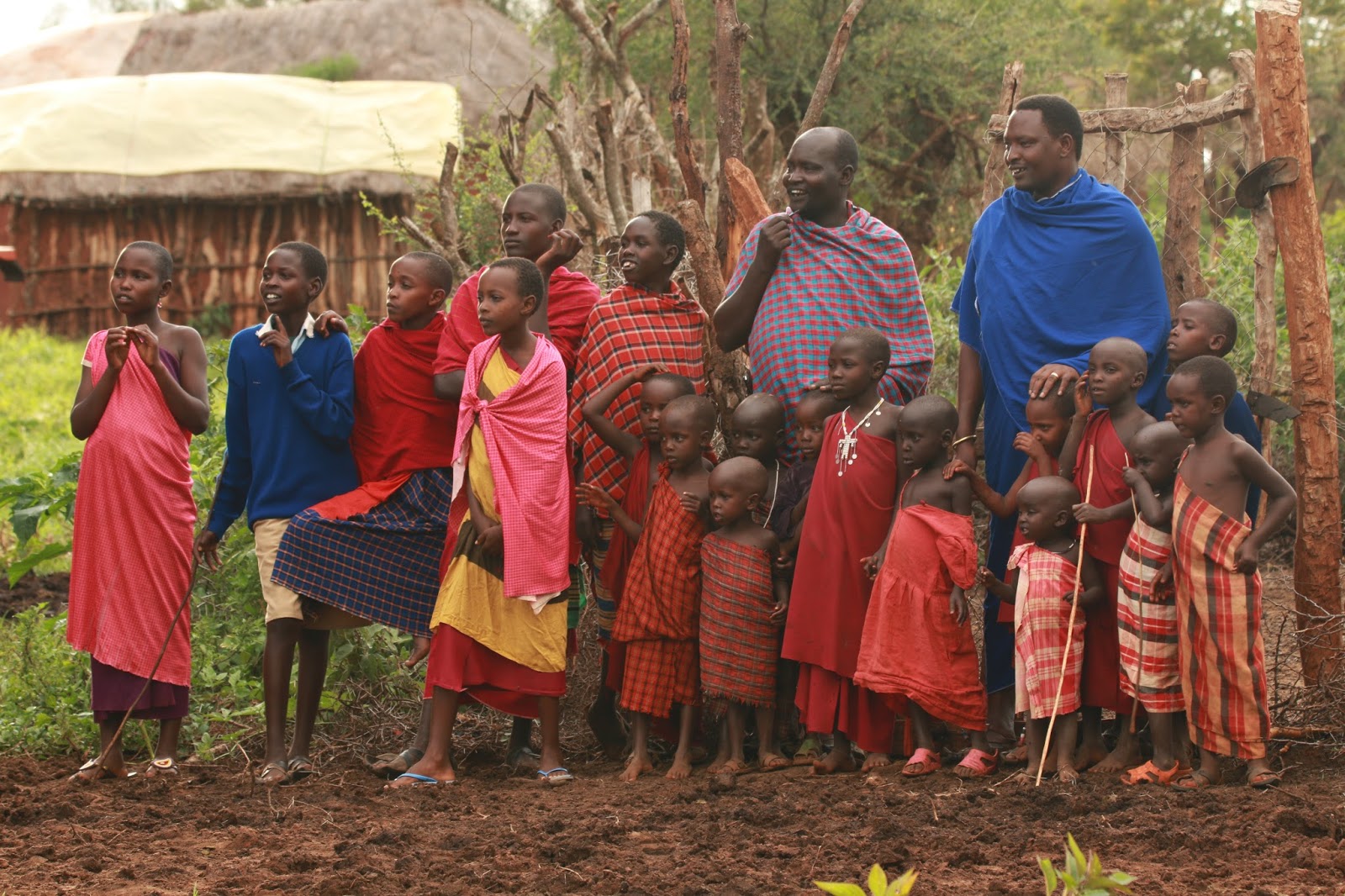
Edward Loure, the Maasai leader who champions indigenous land rights in Tanzania


Edward Loure/courtesy of Goldman Environmental Prize


From the Andes to sub-Saharan Africa, indigenous groups are increasingly fighting for legal ownership of lands their ancestors have occupied for thousands of years – and in the rangelands of Tanzania, one activist believes he’s found a possible solution based on collective ownership.

Edward Loure, a Maasai leader and indigenous land rights activist from northern Tanzania, pioneered an innovative legal mechanism to preserve large expanses of ancestral lands in the Great Rift Valley, protecting both a traditional way of life and wildlife.  It is the first time tribal work has been linked to conservation in Tanzania - creating a model for other indigenous groups elsewhere in Africa and around the world to follow.

Up to two thirds of world's land held by indigenous people are under informal systems not legally recognised by states, according to a recent report by Oxfam International. Communities without formal title to lands where they may have lived for generations can be displaced by large-scale resource extraction projects, sold off to the highest bidder or seized by squatters clearing their land for illegal agriculture, according to the report, backed by 300 organisations worldwide who are pushing to expand land rights.

“Our land means everything to us. If we have no grass pastures, we will not have our cows, and without our cows, we cannot survive,” Loure told me, speaking via Skype from Dar es Salaam.

Loure, who is in his forties, grew up in the Simanjiro plains in the vast northern rangelands of Tanzania. Here communities of pastoralists and hunter-gatherers have lived off the land in harmony with migrating wildlife for centuries.  The savannahs and grasslands of northern Tanzania are home to an abundance of wildlife including gazelles, elephants, wildebeest, zebras, impalas and many other animals that keep the ecosystem in balance. Traditional communities are a vital part of that ecosystem, Loure says. “We depend on our lands and these lands have shaped our cultures and way of life.”

Edward Loure in his community/courtesy of Goldman Environmental Prize

But the pastoralists and hunter-gatherers’ traditional ways of life have been threatened since the 1950s when the Tanzanian government started creating National Parks. These efforts displaced thousands of indigenous people and jeopardized wildlife by destroying migratory corridors. The situation has been exacerbated in recent years by government sell-offs of ancestral lands to hunting and safari companies, and by the encroachment of unauthorised “land grabbers” seeking to use traditional grazing lands for large-scale farming.

Loure’s own community met a similar fate in 1970, when it was forcibly displaced to create the Tarangire National Park. This inspired Loure to join the Ujamaa Community Resource (UCRT), one of the first community-led NGOs in Tanzania, which has championed sustainable development and community land rights for the past 20 years.

Looking for better ways to secure land tenure, Loure saw an opportunity in the strong communal culture among tribes. He worked with UCRT to have a key legal mechanism called Certificates of Customary Rights of Occupancy (CCROs) – the primary mechanism through which land is protected under the Village Land Act – made available to groups, rather than only to individual land-owners. And that opened the door to a string a land victories. 

Over the years, at least 223,000 acres of Tanzania’s northern rangelands have been safeguarded through CCROs. Once their land rights are legally secured, communities can better access, manage and benefit from their natural resources, Loure says.

These communal land rights concepts, innovated in Tanzania, have the potential to have a global impact, says Matthew Brown, Africa Conservation Director at The Nature Conservancy.  “The notion that we need to secure local people’s collective land rights and have it officially signed off at the national level is replicable and is needed in other countries.”


For his innovative indigenous land rights work, Loure was awarded the 2016 Goldman Environmental Prize for Africa in April, a sort of Nobel for grassroots environmental activists.
 
You can read more about Loure’s communal land rights scheme and its impact in this story I wrote for Positive News.


Wednesday, 13 February 2013

Women who feed the world - Mothers of the Soil

Here is an article I wrote for the Indian magazine The Caravan about an innovative collaboration between Oxfam and the popular Tanzanian reality TV show Maisha Plus.

The idea was to celebrate the women who grow most of the food in developing countries and show viewers how important they are, how resourceful and creative they are, and how hard they work. 

I spent a week in the reality TV village, getting to know the 14 finalists and some of the young people, and watching them going about their daily activities. We would sit on mats they had woven and they would tell me their stories, which my lovely translator Abigail-Precious Ambweni, translated. I loved it!  Their stories moved me, inspired me, made me angry, made me happy – and I am sure the million of viewers who watched the show at night felt the same way.

Studies have shown that the best way to cut hunger in the world is to invest in women who farm small plots and ensure they have the same rights and access to resources as men. So let's do it!

Mothers of the Soil


By Veronique Mistiaen | 1 February 2013

The latest season of Maisha Plus gave young contestants and viewers a taste of what women in Tanzania and across Africa go through to put food on the table. COURTESY SVEN TORFIN / OXFAM


THE LATE-AFTERNOON SUN bathed the small village in soft, golden light. With thatched huts scattered among palm trees, vegetable gardens, a well, and scrawny chickens scurrying about, it was the quintessential rural African scene. But a closer inspection revealed cables half-buried in the grey sand, and cameras hidden behind palm trees and shrubs.

We were in a make-believe village, built from scratch at a secret location in the Pwani region of Tanzania. The village was the set for Maisha Plus, a Big Brother-type television show, whose latest season was produced in collaboration with the international development charity Oxfam, and ran from October to December last year. Twenty-five young men and women from cities were competing in a standard ‘survival’ format show, but this season the show also had a special segment in which 14 women who farm small plots of land in rural Tanzania competed for the title of “Mama Shujaa Wa Chakula” (Female Food Hero). This segment was an extension of a show Oxfam had introduced the  previous year.

Oxfam estimates that their female food heroes show reached 25 million Tanzanians in 2011, through television, as well as through discussions on radio, social media and newspapers—even in remote villages, people gather at night in community centres to watch it. “The idea behind the show is to give young contestants and millions of viewers a taste of what women in Tanzania and across Africa go through to put food on their tables with limited resources and in the face of enormous challenges,” said Mwanahamisi Salimu, a coordinator with Oxfam. “It is an opportunity to push for them to have access to the same rights and resources as their male counterparts, and a way to scale up the voices of women farmers.”

The women contestants arrived in the village first, and stayed for two weeks, performing the tasks they would in their own daily lives—clearing land, planting vegetables, milking goats, fetching water, cooking cassava and building chicken coops. The young people, who joined the women at the end of the women’s stay, learned these skills from them over a week, before being left to survive on their own for the next eight weeks. Viewers voted winners from both groups, influenced as much by the contestants’ performance of the tasks as by their personalities and life stories.

In Tanzania, as in many African countries, women produce much of the food that feeds people. Few, however, own the land they farm or enjoy the same rights as men. In a pre-show interview to Oxfam and Maisha Plus, Tatu Abdi, a contestant from the Tanga region said, “Women are treated as tractors, but they have to treat their husbands like angels.”

The 14 women on the show were selected from among more than 7,000 applicants from across the country, and were in many ways typical of the millions of women who farm small plots of land. But the participants were also chosen for their unique life experiences and the challenges they had overcome. Eline Olotu Orio from the Kilimanjaro region, for example, managed to fight her community’s deep-seated patriarchal tradition and acquire a piece of land when she was only 20 years old. Nearly two decades later, this land supports her family, and Orio continues to improve her farm with innovative ideas—among these is a metal granary to protect her produce from the region’s scourge of rodents, which can eat up as much as 30 percent of a farmer’s crops. Another contestant, Emiliana Aligaesha from the Kagera region, couldn’t feed her nine children on her primary-school teacher’s salary, and so turned to agriculture. She now grows coffee, banana, beans and maize, and supplies quality seedlings to other villagers. Dorah Myinga from the Southern Highlands took a loan to buy a tractor—a step unheard of for a woman, let alone a widow. She now tends her 12-acre farm, and also earns money by renting her tractor out to other villagers.

To prepare for the show, a team from Oxfam and Maisha Plus spent a month criss-crossing the country to document the lives of these and other finalists. In the process, they uncovered some of the issues that hinder women’s progress: they often don’t own the land they work on, they struggle to get fair access to markets, they lack proper training and adequate tools, and they often face threats of violence. In almost all the villages, women complained that they were the ones seeding, planting, weeding and ploughing crops; but when harvest time came, men took over—sometimes selling the crops and keeping all the profits. In Orio’s village, women talked of a horrifying “season of rape”—a time when maize has grown so tall that some men hide in the fields, and attack, rape and even kill women. “The weeding season has become the raping season,” said one woman from the village during an open forum with Oxfam. “Since no men tend to the farms and women’s farms are very far from villages, rapists take advantage of that. We buried a victim a couple of weeks ago.”

Friday, 21 December 2012

Women Farmers in Tanzania - I'm a farmer, get me out of there!


Women farmers at the Maisha Plus Village teach youngsters from the city how to grow and prepare their food/Sven Torfinn
I spent a few days in a typical African village in Tanzania with thatched huts, water well, goats and scrawny chickens scurrying about, but this village was actually built from scratch at a secret location in the Pawni region. It was the set for a Big Brother-type show organized by the international development charity Oxfam and the popular Tanzanian reality TV show Maisha Plus. Fourteen women who farm small plots of land in rural Tanzania and 26 youths from the cities competed for the titles of "Mama Shujaa Wa Chakula" (woman food hero) and youth food hero.
 
The idea was to give young contestants and millions of viewers a taste of what women in Africa go through to put food on the table with limited resources and in the face of enormous challenges. It was also a rare opportunity to celebrate them, put farming and gender issues on the agenda and force politicians to listen.

Here is a short blog post I've written for the Economist:


The EconomistFarming in Tanzania

I'm a farmer, get me out of here

Dec 18th 2012, 9:57 by V.M. | DAR ES SALAAM


STARS of most reality television shows spend their time nibbling earwigs, sunbathing and bickering. Those taking part in a Big Brother-style show recently broadcast in Tanzania, however, had a more productive experience.

Fourteen farmers, all women, and 26 urban youngsters were thrown together in a specially constructed village under near 24-hour TV surveillance. The women set daily tasks from their own lives—growing vegetables, looking after cows or fetching water—which the teenagers had to complete in order to survive. The farmers were given farming tips and got to talk to politicians and policy-makers in the "diary room".

In Tanzania, as in many African countries, women produce much of the food that feeds their people, but few own their land. "Women are treated as tractors, but they have to treat their husbands like angels," said one of the contestants.

The Women Food Heroes competition, run by Oxfam and "Maisha Plus", a popular Tanzanian reality TV show, gave the young contestants and its viewers a taste of what women in Tanzania endure to put food on the table. It was a rare opportunity to promote women’s voices and celebrate their contribution, says Mwanahamisi Salimu of Oxfam. It was also a chance to push for them to have access to the same kind of support and rights already available to men farmers, she continues. It showed that small-scale agriculture is a sustainable way of feeding the country.

Broadcast nightly on the biggest national network and promoted on social media, radio and newspapers, the programme reached more than half the population. In the countryside, people gathered in community centres to watch it. Its popularity has forced politicians to talk about farming, a subject about which they are usually fairly quiet.

The winner, Sister Martha Mwasu Waziri from Dodoma, who won $6,300 to buy farming equipment, says she wants to turn her farm—which she built on a scrap of wasteland—into a demonstration farm to show others what they can achieve. "I learned so much here and that is more important to me than winning the competition," says Mary Kamwaka Maumbi, another finalist. "I’ve learned how to do a crop calendar, when to start breeding my pigs and when to inoculate them, how to get my produce to the market and what to do with my money.  I’ll put everything into practice and will show others how to do it.  It will have an impact on my whole village."

Wednesday, 5 September 2012

Poverty in the UK – Save the Children launches first domestic appeal

-->

Save the Children is best known for its work with starving children in Africa or Asia, but this time, the international aid charity is turning its attention to the UK – the world’s sixth richest country.   

The charity is launching “It Shouldn’t Happen Here”,  its first-ever domestic appeal to help children across the UK have hot meals, adequate shoes, winter clothes and other necessities they cannot afford because their parents have been hit hard by budget cuts and the recession.

The charity is hoping to raise £500,000  - a modest goal compared to its international humanitarian appeals – but its symbolic impact is huge. It shows the failure of the coalition government to tackle mounting poverty and inequality in the UK.

 "It is shocking to think that in the UK in 2012, families are being forced to miss out on essentials like food or take on crippling debts just to meet everyday living costs,” says Chris Wellings, Save the Children's UK head of policy.  "Poverty in the UK is different to some of the poorer countries in the world. It is more nuanced and poses different problems. But it does not mean that we cannot stand up for children's rights in the UK."

According to a survey of 5,000 UK adults commissioned by Save the Children:
• Nearly two thirds of parents in poverty (61%) say they have cut back on food and over a quarter (26%) say they have skipped meals in the past year.
• One in five parents in poverty says they cannot afford to replace their children's worn-out shoes, while 80% of parents in poverty say they have had to borrow money to pay for food and clothes over the past 12 months.
• Some 44% of families in poverty say that "every week they are short of money", while 29% say they have "nothing left to cut back on".

Not surprisingly, financial worries are taking a toll on parents’ physical and mental well-being, triggering arguments and other signs of family stress, the survey indicates. 

Save the Children is calling on the government to stick to its 2020 child poverty targets, to encourage more employers to give the current living wage of £7.20 to  £8.30 an hour, provide extra childcare support for low-income parents and allow parents to keep more of their earnings before benefits are withdrawn. 

The charity's Shouldn't Happen Here report is the second high-profile study by an international aid charity to focus on domestic poverty in recent months. Oxfam's Perfect Storm, published in June, said that cuts and rising living costs were threatening to return the UK to levels of inequality not seen since Victorian times.

Monday, 10 January 2011

Haiti earthquake - one year on: international failure, suffering, but also resilience


Photograph: Thony Belizaire/AFP/Getty Images 


Haiti one year on looks depressingly similar to Haiti six months ago. Things have hardly moved:  the country is still in ruins, nearly one million people are still living under tents and tarpaulin and only 5% of rubble left by the devastating January 12, 2010 earthquake has been cleared.


An Oxfam report, published ahead of the earthquake anniversary on Wednesday, says government dithering and lack of coordination between aid agencies and donors have crippled rebuilding efforts in Haiti.

The destruction of the capital and death of an estimated 230,000 people prompted a huge international relief effort last year, with $2.1bn (£1.4bn) pledged. Thousands of aid agencies and missionary groups flocked into the Caribbean nation.  But according to the UN's special envoy for Haiti, only 42% of that was spent.

The country's Oxfam's director said near paralysis in Haiti's government had been compounded by mistakes in the international response. "Too many donors from rich countries have pursued their own aid priorities and have not effectively coordinated amongst themselves or worked with the Haitian government.”

The agency also accused the interim Haiti recovery commission, led by the former US president Bill Clinton and Haiti's prime minister, Jean-Max Bellerive, of being "lacklustre" in managing funds and improving Haiti's technical capacity to spend them.

Haiti's sense of drift was underlined by last week's announcement that political wrangling has delayed the second round of the disputed presidential election until February, leaving Haiti's leadership also in limbo.

To a litany of woes – unemployment, cholera, extreme poverty – an Amnesty International report last week added sexual violence. Armed men prey with impunity on girls and women in displacement camps, worsening the trauma of having lost homes, livelihoods and loved ones, says the report.


But as cholera and political instability dominate headlines around the quake's one-year anniversary, life goes on in Haiti, even in the shadow of tragedy. People do what they can to cope.

AlertNet, the global humanitarian news service run by Thomson Reuters Foundation, has created a space for ordinary Haitians to tell their story.   Their multimedia documentary One-Day in Port-au-Prince transports us to the streets and tent cities of Haiti’s capital.  Each of the 14 people featured, tell their story in their own words and evoke issues central to the country’s recovery, from education and health to resettlement and reconstruction.


From the homeless schoolgirl who studies science by candlelight to the doctor who built a makeshift operating theatre in the ruins of a hospital, One Day in Port-au-Prince tells stories of resilience, ingenuity and courage.

There is a Voodoo priest who takes a stand against mass burials, a young mother forced to sell her own body, a former professional goalkeeper who rhapsodises about soccer's power to heal and a woman who sells textbooks yet can't afford to send her own kids to school. 

AlterNet hope that "One Day in Port-au-Prince" will be the beginning of an exchange between those who are doing their best to cope with the Haiti quake and people around the world who support Haiti's recovery.

Wednesday, 30 June 2010

Congo Now! Celebrates 50 years of independence; demands end of conflict


As the Democratic Republic of Congo (DRC)  celebrates 50 years of independence today  (June 30th), the Congo Now! campaign is launching a series of events to celebrate the rich creativity of the Congolese people and raise awareness of the ongoing conflict and humanitarian crisis in the east of Congo.

Congo Now! is backed by over 30 NGOs working on Congo, including Christian Aid, Oxfam and Global Witness, as well as UK-based Congolese groups, and the All Party Parliamentary Group on the Great Lakes Region of Africa.  The campaign is calling on the new UK Government to revitalise its commitment to end the violence and the suffering of civilians in DRC.

The campaign combines cultural events with campaign activities - from a cocktail party featuring award-winning photojournalist Susan Schulman to Parliamentary roundtables; from a run in support of Congo’s women in Regent’s Park to talks by activist Sam Roddick.   There is also a night of entertainment at the Southbank Centre with Sandi Toksvig, Eddie Kadi and Ronan Bennett  to name a few, as well a postcard petition aimed at Prime Minister David Cameron calling for the UK Government to do more to end violence in the DRC.

Eric Joyce MP, Congo Now! spokesperson said:
“The 30th June sees Congo marking 50 years of independence, but for many in the eastern parts of Congo, there is little to celebrate.  Some two million people are unable to go home as a result of the conflict, with rape and violence daily threats.  It is tragic that this conflict has been forgotten for so long. We are calling on our politicians to mark this anniversary by doing more to help build a Congo free of violence.”
The DRC has been described as the ‘heart of Africa’ and is home to enormous natural wealth and resources. However for the last 15 years, the country has been ravaged by the world’s deadliest conflict since World War II:
•       with an estimated 5.4 million dead  – more than 2.7 million of them children
•        over 9,000 people were raped in Kivu provinces of eastern Congo last year.
•      over 115,000 people were displaced in the first three months of 2010


The UK government is currently the largest bilateral donor to the DRC, with a commitment of £130 million for 2010.  Congo Now! is calling on the UK to maintain its funding and strengthen its political efforts on the DRC. 
In particular it is calling on the UK to:
•      Stop natural resources fuelling the conflict – by adopting legislation to ensure that materials purchased by UK companies neither finance armed groups nor contribute to human rights abuses.
•      Protect civilians from violence – by calling on the Congolese government to reform their armed forces, which too often prey on rather than protect civilians; and urging the United Nations peacekeeping mission in the Congo to protect people and ensure guarantees for civilian safety are put in place before any significant reduction of peacekeepers takes place.
•       Promote non-military and regional solutions to the conflict.
•      Address the devastating causes and consequences of conflict and sexual violence particularly for women and children  by providing effective humanitarian and development assistance across the country, including for projects focused on the care for survivors of sexual violence and former child soldiers.  

For more information and a list of events, click here.