Showing posts with label Tanzania. Show all posts

Thursday, 30 June 2016

Edward Loure, the Maasai leader who champions indigenous land rights in Tanzania


Edward Loure/courtesy of Goldman Environmental Prize


From the Andes to sub-Saharan Africa, indigenous groups are increasingly fighting for legal ownership of lands their ancestors have occupied for thousands of years – and in the rangelands of Tanzania, one activist believes he’s found a possible solution based on collective ownership.

Edward Loure, a Maasai leader and indigenous land rights activist from northern Tanzania, pioneered an innovative legal mechanism to preserve large expanses of ancestral lands in the Great Rift Valley, protecting both a traditional way of life and wildlife.  It is the first time tribal work has been linked to conservation in Tanzania - creating a model for other indigenous groups elsewhere in Africa and around the world to follow.

Up to two thirds of world's land held by indigenous people are under informal systems not legally recognised by states, according to a recent report by Oxfam International. Communities without formal title to lands where they may have lived for generations can be displaced by large-scale resource extraction projects, sold off to the highest bidder or seized by squatters clearing their land for illegal agriculture, according to the report, backed by 300 organisations worldwide who are pushing to expand land rights.

“Our land means everything to us. If we have no grass pastures, we will not have our cows, and without our cows, we cannot survive,” Loure told me, speaking via Skype from Dar es Salaam.

Loure, who is in his forties, grew up in the Simanjiro plains in the vast northern rangelands of Tanzania. Here communities of pastoralists and hunter-gatherers have lived off the land in harmony with migrating wildlife for centuries.  The savannahs and grasslands of northern Tanzania are home to an abundance of wildlife including gazelles, elephants, wildebeest, zebras, impalas and many other animals that keep the ecosystem in balance. Traditional communities are a vital part of that ecosystem, Loure says. “We depend on our lands and these lands have shaped our cultures and way of life.”
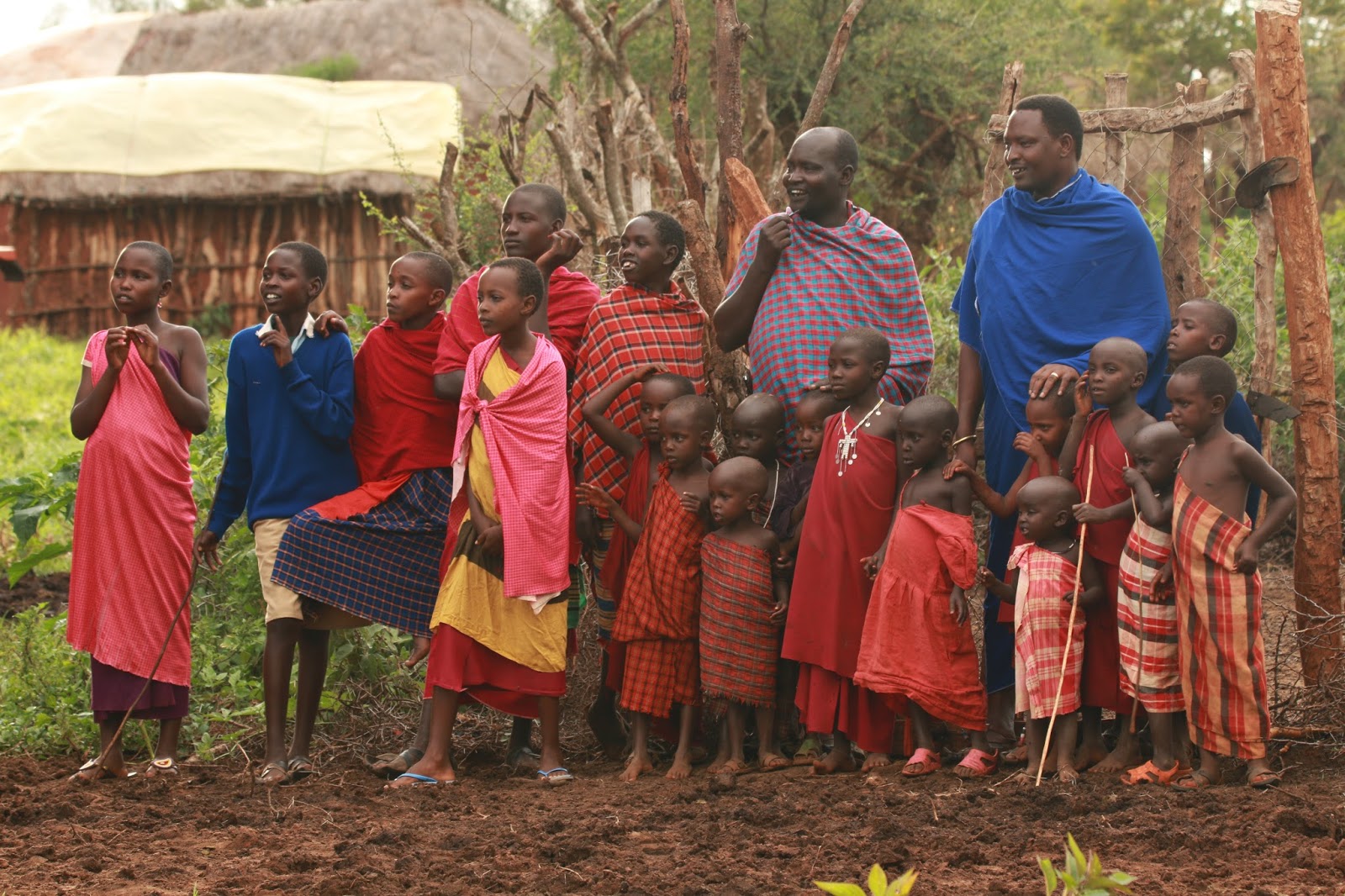
Edward Loure in his community/courtesy of Goldman Environmental Prize

But the pastoralists and hunter-gatherers’ traditional ways of life have been threatened since the 1950s when the Tanzanian government started creating National Parks. These efforts displaced thousands of indigenous people and jeopardized wildlife by destroying migratory corridors. The situation has been exacerbated in recent years by government sell-offs of ancestral lands to hunting and safari companies, and by the encroachment of unauthorised “land grabbers” seeking to use traditional grazing lands for large-scale farming.

Loure’s own community met a similar fate in 1970, when it was forcibly displaced to create the Tarangire National Park. This inspired Loure to join the Ujamaa Community Resource (UCRT), one of the first community-led NGOs in Tanzania, which has championed sustainable development and community land rights for the past 20 years.

Looking for better ways to secure land tenure, Loure saw an opportunity in the strong communal culture among tribes. He worked with UCRT to have a key legal mechanism called Certificates of Customary Rights of Occupancy (CCROs) – the primary mechanism through which land is protected under the Village Land Act – made available to groups, rather than only to individual land-owners. And that opened the door to a string a land victories. 

Over the years, at least 223,000 acres of Tanzania’s northern rangelands have been safeguarded through CCROs. Once their land rights are legally secured, communities can better access, manage and benefit from their natural resources, Loure says.

These communal land rights concepts, innovated in Tanzania, have the potential to have a global impact, says Matthew Brown, Africa Conservation Director at The Nature Conservancy.  “The notion that we need to secure local people’s collective land rights and have it officially signed off at the national level is replicable and is needed in other countries.”


For his innovative indigenous land rights work, Loure was awarded the 2016 Goldman Environmental Prize for Africa in April, a sort of Nobel for grassroots environmental activists.
 
You can read more about Loure’s communal land rights scheme and its impact in this story I wrote for Positive News.


Wednesday, 13 February 2013

Women who feed the world - Mothers of the Soil

Here is an article I wrote for the Indian magazine The Caravan about an innovative collaboration between Oxfam and the popular Tanzanian reality TV show Maisha Plus.

The idea was to celebrate the women who grow most of the food in developing countries and show viewers how important they are, how resourceful and creative they are, and how hard they work. 

I spent a week in the reality TV village, getting to know the 14 finalists and some of the young people, and watching them going about their daily activities. We would sit on mats they had woven and they would tell me their stories, which my lovely translator Abigail-Precious Ambweni, translated. I loved it!  Their stories moved me, inspired me, made me angry, made me happy – and I am sure the million of viewers who watched the show at night felt the same way.

Studies have shown that the best way to cut hunger in the world is to invest in women who farm small plots and ensure they have the same rights and access to resources as men. So let's do it!

Mothers of the Soil


By Veronique Mistiaen | 1 February 2013

The latest season of Maisha Plus gave young contestants and viewers a taste of what women in Tanzania and across Africa go through to put food on the table. COURTESY SVEN TORFIN / OXFAM


THE LATE-AFTERNOON SUN bathed the small village in soft, golden light. With thatched huts scattered among palm trees, vegetable gardens, a well, and scrawny chickens scurrying about, it was the quintessential rural African scene. But a closer inspection revealed cables half-buried in the grey sand, and cameras hidden behind palm trees and shrubs.

We were in a make-believe village, built from scratch at a secret location in the Pwani region of Tanzania. The village was the set for Maisha Plus, a Big Brother-type television show, whose latest season was produced in collaboration with the international development charity Oxfam, and ran from October to December last year. Twenty-five young men and women from cities were competing in a standard ‘survival’ format show, but this season the show also had a special segment in which 14 women who farm small plots of land in rural Tanzania competed for the title of “Mama Shujaa Wa Chakula” (Female Food Hero). This segment was an extension of a show Oxfam had introduced the  previous year.

Oxfam estimates that their female food heroes show reached 25 million Tanzanians in 2011, through television, as well as through discussions on radio, social media and newspapers—even in remote villages, people gather at night in community centres to watch it. “The idea behind the show is to give young contestants and millions of viewers a taste of what women in Tanzania and across Africa go through to put food on their tables with limited resources and in the face of enormous challenges,” said Mwanahamisi Salimu, a coordinator with Oxfam. “It is an opportunity to push for them to have access to the same rights and resources as their male counterparts, and a way to scale up the voices of women farmers.”

The women contestants arrived in the village first, and stayed for two weeks, performing the tasks they would in their own daily lives—clearing land, planting vegetables, milking goats, fetching water, cooking cassava and building chicken coops. The young people, who joined the women at the end of the women’s stay, learned these skills from them over a week, before being left to survive on their own for the next eight weeks. Viewers voted winners from both groups, influenced as much by the contestants’ performance of the tasks as by their personalities and life stories.

In Tanzania, as in many African countries, women produce much of the food that feeds people. Few, however, own the land they farm or enjoy the same rights as men. In a pre-show interview to Oxfam and Maisha Plus, Tatu Abdi, a contestant from the Tanga region said, “Women are treated as tractors, but they have to treat their husbands like angels.”

The 14 women on the show were selected from among more than 7,000 applicants from across the country, and were in many ways typical of the millions of women who farm small plots of land. But the participants were also chosen for their unique life experiences and the challenges they had overcome. Eline Olotu Orio from the Kilimanjaro region, for example, managed to fight her community’s deep-seated patriarchal tradition and acquire a piece of land when she was only 20 years old. Nearly two decades later, this land supports her family, and Orio continues to improve her farm with innovative ideas—among these is a metal granary to protect her produce from the region’s scourge of rodents, which can eat up as much as 30 percent of a farmer’s crops. Another contestant, Emiliana Aligaesha from the Kagera region, couldn’t feed her nine children on her primary-school teacher’s salary, and so turned to agriculture. She now grows coffee, banana, beans and maize, and supplies quality seedlings to other villagers. Dorah Myinga from the Southern Highlands took a loan to buy a tractor—a step unheard of for a woman, let alone a widow. She now tends her 12-acre farm, and also earns money by renting her tractor out to other villagers.

To prepare for the show, a team from Oxfam and Maisha Plus spent a month criss-crossing the country to document the lives of these and other finalists. In the process, they uncovered some of the issues that hinder women’s progress: they often don’t own the land they work on, they struggle to get fair access to markets, they lack proper training and adequate tools, and they often face threats of violence. In almost all the villages, women complained that they were the ones seeding, planting, weeding and ploughing crops; but when harvest time came, men took over—sometimes selling the crops and keeping all the profits. In Orio’s village, women talked of a horrifying “season of rape”—a time when maize has grown so tall that some men hide in the fields, and attack, rape and even kill women. “The weeding season has become the raping season,” said one woman from the village during an open forum with Oxfam. “Since no men tend to the farms and women’s farms are very far from villages, rapists take advantage of that. We buried a victim a couple of weeks ago.”

Friday, 21 December 2012

Women Farmers in Tanzania - I'm a farmer, get me out of there!


Women farmers at the Maisha Plus Village teach youngsters from the city how to grow and prepare their food/Sven Torfinn
I spent a few days in a typical African village in Tanzania with thatched huts, water well, goats and scrawny chickens scurrying about, but this village was actually built from scratch at a secret location in the Pawni region. It was the set for a Big Brother-type show organized by the international development charity Oxfam and the popular Tanzanian reality TV show Maisha Plus. Fourteen women who farm small plots of land in rural Tanzania and 26 youths from the cities competed for the titles of "Mama Shujaa Wa Chakula" (woman food hero) and youth food hero.
 
The idea was to give young contestants and millions of viewers a taste of what women in Africa go through to put food on the table with limited resources and in the face of enormous challenges. It was also a rare opportunity to celebrate them, put farming and gender issues on the agenda and force politicians to listen.

Here is a short blog post I've written for the Economist:


The EconomistFarming in Tanzania

I'm a farmer, get me out of here

Dec 18th 2012, 9:57 by V.M. | DAR ES SALAAM


STARS of most reality television shows spend their time nibbling earwigs, sunbathing and bickering. Those taking part in a Big Brother-style show recently broadcast in Tanzania, however, had a more productive experience.

Fourteen farmers, all women, and 26 urban youngsters were thrown together in a specially constructed village under near 24-hour TV surveillance. The women set daily tasks from their own lives—growing vegetables, looking after cows or fetching water—which the teenagers had to complete in order to survive. The farmers were given farming tips and got to talk to politicians and policy-makers in the "diary room".

In Tanzania, as in many African countries, women produce much of the food that feeds their people, but few own their land. "Women are treated as tractors, but they have to treat their husbands like angels," said one of the contestants.

The Women Food Heroes competition, run by Oxfam and "Maisha Plus", a popular Tanzanian reality TV show, gave the young contestants and its viewers a taste of what women in Tanzania endure to put food on the table. It was a rare opportunity to promote women’s voices and celebrate their contribution, says Mwanahamisi Salimu of Oxfam. It was also a chance to push for them to have access to the same kind of support and rights already available to men farmers, she continues. It showed that small-scale agriculture is a sustainable way of feeding the country.

Broadcast nightly on the biggest national network and promoted on social media, radio and newspapers, the programme reached more than half the population. In the countryside, people gathered in community centres to watch it. Its popularity has forced politicians to talk about farming, a subject about which they are usually fairly quiet.

The winner, Sister Martha Mwasu Waziri from Dodoma, who won $6,300 to buy farming equipment, says she wants to turn her farm—which she built on a scrap of wasteland—into a demonstration farm to show others what they can achieve. "I learned so much here and that is more important to me than winning the competition," says Mary Kamwaka Maumbi, another finalist. "I’ve learned how to do a crop calendar, when to start breeding my pigs and when to inoculate them, how to get my produce to the market and what to do with my money.  I’ll put everything into practice and will show others how to do it.  It will have an impact on my whole village."