Showing posts with label Majid Naficy. Show all posts

Thursday, 5 May 2011

New York 9/11


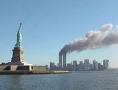
As the world is pondering the implications of Osama bin Laden’s killing in Pakistan (and I feel very uneasy about it, wishing that he could have been put on trial instead), I was reminded of the poem Iranian poet Majid Naficy (who now lives in Los Angeles) wrote on 9/11. Here it is:

 New York

                        by Majid Naficy

Today
New York bent down
And cried
In the Atlantic waters

She sustained a wound
To her spine

Then she remembered
The old wounds of her kids
From the Netherlands and Ireland
From black Africa
From Poland and the Ukraine
And the oases  of the Holy Land

No! She will rise again
And let the sun
Shine on her face
And her children
Will hold hands
And come back to dance
Around her whirling skirt

                        September 11, 2001

Tuesday, 14 December 2010

Khomeini's visit


This morning, I listened to a fascinating interview of Mohsen Sazegara by Fergal Keane on BBC4.  Sazegara was at the heart of Ayatollah Khomeini's regime from the moment the spiritual leader returned to Iran from exile.
Throughout the 1970s, he had been a student activist agitating for the overthrow of the Shah. In 1979 he became Khomeini's press attaché. He also helped found the now feared Revolutionary Guard, originally established as a defence force against possible attack from Israel or the United States.
As the Islamic state was established, dissenters were executed in their hundreds. But then factions within the regime began to turn against Sazegara who was pressing for greater co-operation with opposition groups.
It was a path that would lead to his imprisonment - and eventually to exile in the West. But not before he witnessed for himself what really happened inside Tehran's Evin prison, as he explains to Fergal Keane in Taking a Stand.

The programme made me think of a powerful epic poem I've read recently. The poem, called "Khomeini's visit", vividly describes some of the events Sazegara talked about in his interview and more generally, the history of Iran over the past four decades. It is written by the Iranian poet Majid Naficy. He too was active against the Shah’s regime in the 1970s. After the 1979 Revolution, as the new regime began to suppress the opposition, his first wife Ezzat Tabaian and his brother Sa’id were amongst the many to be executed. He fled Iran in 1983, eventually settling in Los Angeles with his son Azad.

The poem is very long, but try to read all of it (click on "read more") . It is well worth it!

Khomeini's Visit

                     by Majid Naficy

My father never told us

That Khomeini had visited him

For medical treatment many years ago

When Khomeini was only a "Khomeini"

And not yet the Deputy of God. (1)


The patient, perhaps, complained of heart palpations

The father looked at his tongue and eyes

Took his pulse and listened to his heart.

The patient removed his black turban and amber sandals

And took out his light cloak and long tunic. 

He laid down on the bed unmasked

And surrendered himself to a competent physician.


Did the father ask about Journeys written by Sadra of Shiraz (2)

And the patient about Commentary by Nafis, son of Evaz? (3)

Did the patient recite some of his own mystical ghazals,

And the father from free verses of his own son?

Did the patient speak of raising the banner of religion

And the father of kindling the lamp of reason?

No! No! The doctor's office is not a place for chitchat

With so many patients waiting behind the door.

The patient put on his clothing

The father handed him a prescription

And walked him to the door.


Ten years later, in the seventies

When my younger brother Said

Was in the Shah's prison for two years,

Because he had read a pamphlet,

And Khomeini was in exile, in Iraq

I listened to "Voice of the Revolution" in the basement.

One evening, the father came down the stairs

To listen to his old patient

Who spoke of the Shah's torture chambers

And foretold the day of justice.


At that time, no one knew that he

In less than five years,

After the uprising of home-builders in "off-limit" zones

And gathering of intellectuals at Goethe's nights of poetry

After marches of the clergy in Qum, and bazaaris in Tabriz

Strikes of petroleum workers and newspapers

And rallying cries from rooftops at night,

With rising fists and slogans

And falling fears and statues

And the hand-over of prisons and garrisons

Would sit on the throne of the "divine" state;

And after driving out the nationalists from the stage 

He would wrestle with the "Great Satan"

Amidst the hoorays of a Soviet-led left

And the boos of an independent left

Behind the walls of the American embassy,

And with the "export of revolution" to Iraqi Shiites

Saddam's invasion of Iranian land

And the beginning of the Iran-Iraq war

He would energize with "war blessings"

And gather the "flock" behind the "shepherd";
Friday, 24 September 2010

The Neighborhood Mosque


Here is a beautiful poem my friend the Iranian poet Majid Naficy wrote to stress the need to separate state and religion in Iran. “I have come to this realization that for me as an Iranian it is not enough to request separation of religion and state, but I should also show how this tragic fusion had taken place,” he told me.

Majid was born in the ancient city of Isfahan and became a published poet at the young age of 13. He was politically active against the Shah's regime. After the 1979 Revolution, the new regime began to suppress the opposition, and many people, including his first wife and brother were executed. He fled Iran in 1983 and settled in Los Angeles where he lives with his son. He has since published eight collections of poems, including Muddy Shoes and Father & Son.  

Here is his poem:

The Neighborhood Mosque

                  by Majid Naficy


In our neighborhood

There was a tiny mosque

Which had a dome, but no minarets,

And as a child I thought

That Ali had been stabbed there. (1)


The man who called us to prayer

Was a chubby laughing janitor

Who dyed his hair, and beards

Hands and feet with henna,

And the big toe of his right foot

Stuck out from his torn shoe.


Every day early in the morning

I awoke to his harsh bellow

From the rooftop of the mosque

And thought of the shivering boys

Who with sleep around their eyes

And copper bowls in their hands

Passed by the empty mosque

To buy brains and tongues

Ears and cheeks

From the lamb cookery

At the entrance of the alley.


The Revolution gave the mosque two tall minarets

With loudspeakers on their balconies

Blasting days and nights.

The mosque was filled with bearded men carrying rifles

And veiled women standing in line

Collecting their monthly ration carts 

From the state head of prayer

Near his pulpit or prayer niche. (2)

But the laughing muezzin had gone

And instead of him,

The son of the local lamb chef

Sat on the balcony of one of the minarets

Keeping an eye on the neighborhood.


From then on, I would cover my ears

At the sound of the call to prayer,

And never pass by the mosque again

Fearful that the bearded young men

Would jump on top of me

And butcher me in the prayer hall,

Then wash their dirty hands

AT the ablution pool

Without asking themselves:

Is it lawful to shed the blood of a "warring infidel"

In the confines of the neighborhood mosque?
 

          September 16, 2010

1. In 661, Ali, the first Imam of Shi'a muslims was fatally stabbed in a mosque in Kufa, Iraq.

2. Prayer niche (Mihrab) is a niche in the mecca-facing wall that marks the direction of prayer in a mosque where the leader of congregational prayer stations himself.


Saturday, 3 October 2009

My Neighbour Goes to the Zoo - violence and its legacy


In my last post, I wrote about “The Tree That Remembers,” a moving documentary by Masoud Raouf about political prisoners who have been tortured in prison in Iran and the impact it has on their lives.

How can you go on living when you have been subjected to unbearable pain or injustice at the hands of fellow human beings? It is a question that haunts me. I have asked it to many people all over the world. Here two survivors of the Iran 88 massacre share their answers:

Amir Atiabi says: “You have to live with this legacy, you carry an unbearable burden, you cannot know peace until you can share this pain with the rest of humanity. You cannot concentrate on your own life: carrying this burden takes all your energy, it slows you down, it crushes you.”

Mahin, another survivor, explains: I am involved in two contradictory lives. My external life at work, in socialising, entertaining, etc. is filled with joy, activity and optimism. My inner life, however, is filled with stories that cannot be shared with others. Speaking about the prison, executions and the wounds of that period makes me sad and crumpled.

Most people do not have the patience to listen to such stories! The prison and the massacre have strengthened my tendency towards solitude, loneliness and ridiculing death from within. The memories of the prison are at the same time distant and near.”


The legacy of the violence is always there, just below the surface, and crops up even in the most unlikely circumstances, as the Iranian poet Majid Naficy wrote in his latest poem, first published in Iranian.com.


My Neighbor Goes to the Zoo

by Majid Naficy

My neighbor is going to the zoo

With her three grandchildren:

Mussa, who was born in Haifa

Of a Palestinian father and an Israeli mother,

Sees himself as the never-grown-up Peter Pan-

Sailing from the island of Neverland

With one eye green, one eye blue:

Gemini, a twin, who was born in America

And named after his father's lost friend,

Has a moonlight face and a red robe

And sees himself as Casper, the friendly ghost

Returning from the land of martyrs;

And Zahra, who is one minute younger than her brother,

Has soft, golden hair

And sees herself as Alice from Wonderland

Looking for her lost rabbit everywhere.

They are going to the zoo

To visit the crocodiles of the Nile river

Who, everyday after lunch

Lay back on the pebbly shores

And leave their mouths open for hours

So their companion birds can clean

Their sharp teeth and gums,

And when they want to return to the water

The crocodiles gently close their mouths

Lest surprise

Their tooth-brushing plovers.

Having no faith in earthly paradise

And being accustomed to war and bloodshed

I panic from so much co-existence in nature

And unwillingly shout:

My neighbor! My fanciful neighbor!

Keep your grandchildren around your skirt

Lest the warring crocodiles

Roll their armored tanks

And the Iron-winged birds

Drop clusters of bombs

Over their heads.

August 18, 2009


Monday, 3 August 2009

Iran - a poem

I've met Majid through a poem. I had written an article a few months ago for www.iranian.com on Tehran authorities destroying the site of mass graves the district of Khavaran in southeast Tehran. In these unmarked graves lie thousands of political prisoners killed by the Islamic regime in the 1980s - most of them during a secret mass massacre in the summer of 1988. In response, Majid sent me a poem.

Since then, he has sent me more poems, punctuating the events in his native country, creating something beautiful out of pain and violence. I love them. Here is his latest offering:


A Poem: Three Gifts
by Majid Naficy

Published on July 29 in Foreign Policy in Focus in response to the repression and violence in Iran

In Memory of Saeed

One day my father called us and said:
I have three gifts for you —
A red heart, an hourglass, and...
O God, I don't remember the other one.

Mehdy took the heart
Opened its two halves
And strummed the strings of its chambers.

I took the hourglass
And along its white sands
I fell from one half to the other
Asking myself:
What can be done in three minutes?

And Saeed
At age ten went to Paris
For heart surgery
And at age twenty-nine

He was executed in Tehran.
I remember him.
He had red cheeks
And strong hands.

March 1994

Majid Naficy, who is the author of more than 20 books written in Persian, fled Iran in 1983, a year and a half after the execution of his wife Ezzat in Tehran. He has published two collections of poetry "Muddy Shoes" (Beyond Baroque Books 1999) and "Father and Son" (Red Hen Press 2003) as well as his doctoral dissertation "Modernism and Ideology in Persian Literature" (University Press of America 1997) in English. He lives in Los Angeles.