Showing posts with label land rights. Show all posts

Friday, 25 August 2017

Prafulla Samantara: indigenous land rights' champion

Samantara with the Dongria Kondh/ Credit: Goldman Environmental Prize  


Prafulla Samantara has been threatened, kidnapped and jailed trying to stop a huge mining project on sacred tribal land in Odisha, India.  But he is not afraid and, at 65, not ready to retire. ‘I will keep on fighting until my last breath. I cannot betray the people, the cause,’ he told me when I met him in London in late Spring.

The Indian social justice activist won the 2017 Goldman Environmental Prize  for Asia for his 12-year campaign to block the mine and for securing indigenous communities’ voting rights on such projects.

From a young age, he witnessed the impact of mining and industrial development on small farming communities and the growing inequalities between rich and poor. ‘I’ve seen working people and those at the bottom of society being exploited and suffering. Equality and justice became my guiding principles.’

Yet he recognizes that development is necessary, but not at all costs. ‘In India, 60 million people have been displaced over the last 60 years because of big projects such as mining and dams. Indigenous people are not consulted. They are marginalized, even though they are the owners and guardians of natural resources.’

Odisha, the eastern Indian state on the Bay of Bengal where he grew up, is known for its pristine forests, high mountain peaks and numerous rivers; but also for its vast reserve of minerals – almost a third of the state is under mining concessions.

The Odisha Mining Company had agreed a deal with London-based Vedanta Resources to gouge a $2 billion open-pit bauxite mine on the Dongria Kondh’s land without consulting them. 

‘The Dongria Kondh don’t believe in religion, but in nature. The Niyamgiri Hills are their gods. They get everything from them: their entire livelihood and their social and cultural identity. They believe it’s their duty to protect them at all cost.’ The mine would not only have destroyed their homeland, but also polluted water for millions downstream as far as the Bay of Bengal, and destroyed large areas of protected forests which are home to rare wildlife including elephants and the Bengal tiger. In anticipation of receiving the mining licences, Vedanta illegally annexed 148 acres of forest and bulldozed 12 villages.

You can read my article on Samantara for New Internationalist here.


Thursday, 30 June 2016

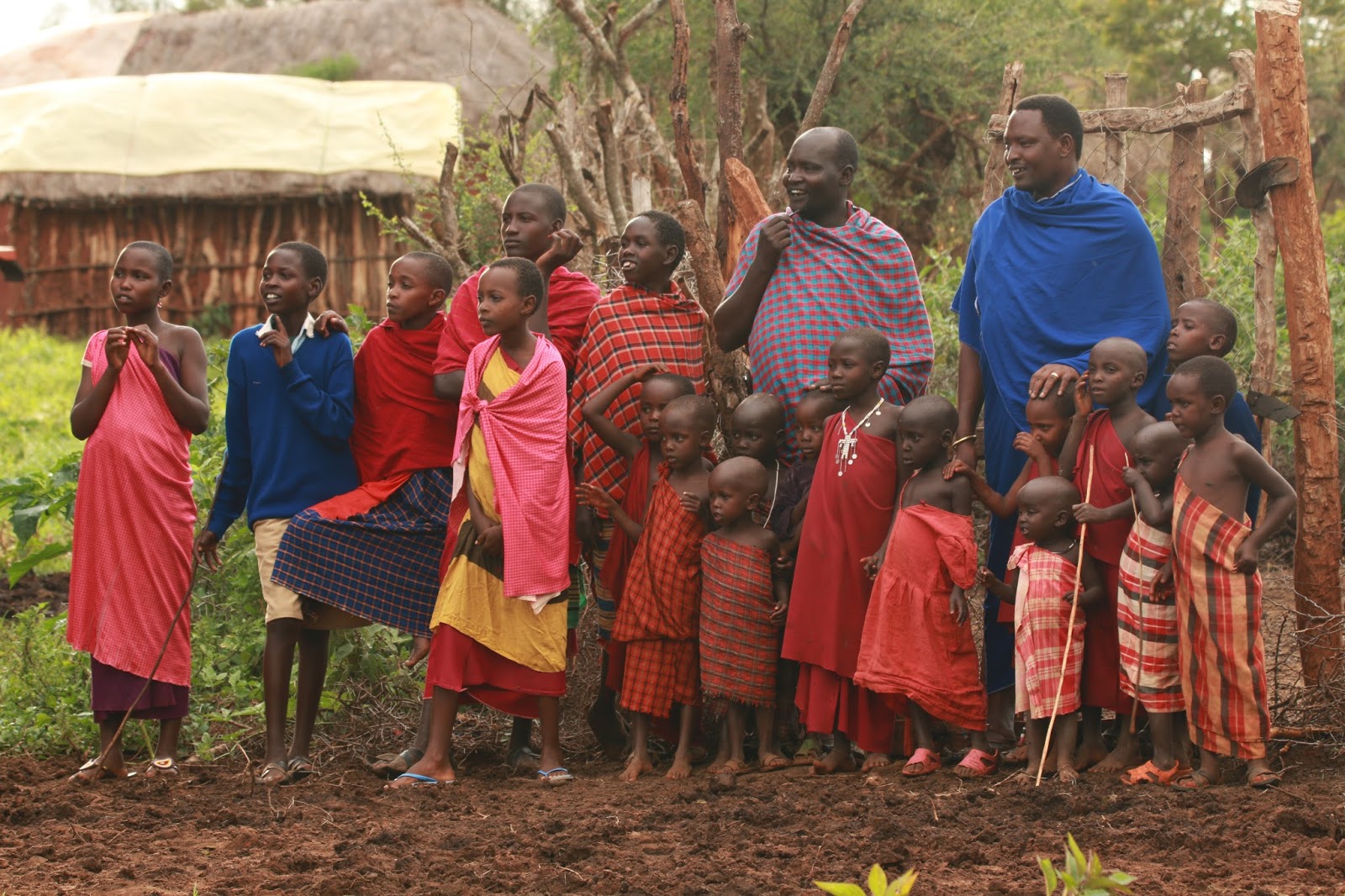
Edward Loure, the Maasai leader who champions indigenous land rights in Tanzania


Edward Loure/courtesy of Goldman Environmental Prize


From the Andes to sub-Saharan Africa, indigenous groups are increasingly fighting for legal ownership of lands their ancestors have occupied for thousands of years – and in the rangelands of Tanzania, one activist believes he’s found a possible solution based on collective ownership.

Edward Loure, a Maasai leader and indigenous land rights activist from northern Tanzania, pioneered an innovative legal mechanism to preserve large expanses of ancestral lands in the Great Rift Valley, protecting both a traditional way of life and wildlife.  It is the first time tribal work has been linked to conservation in Tanzania - creating a model for other indigenous groups elsewhere in Africa and around the world to follow.

Up to two thirds of world's land held by indigenous people are under informal systems not legally recognised by states, according to a recent report by Oxfam International. Communities without formal title to lands where they may have lived for generations can be displaced by large-scale resource extraction projects, sold off to the highest bidder or seized by squatters clearing their land for illegal agriculture, according to the report, backed by 300 organisations worldwide who are pushing to expand land rights.

“Our land means everything to us. If we have no grass pastures, we will not have our cows, and without our cows, we cannot survive,” Loure told me, speaking via Skype from Dar es Salaam.

Loure, who is in his forties, grew up in the Simanjiro plains in the vast northern rangelands of Tanzania. Here communities of pastoralists and hunter-gatherers have lived off the land in harmony with migrating wildlife for centuries.  The savannahs and grasslands of northern Tanzania are home to an abundance of wildlife including gazelles, elephants, wildebeest, zebras, impalas and many other animals that keep the ecosystem in balance. Traditional communities are a vital part of that ecosystem, Loure says. “We depend on our lands and these lands have shaped our cultures and way of life.”

Edward Loure in his community/courtesy of Goldman Environmental Prize

But the pastoralists and hunter-gatherers’ traditional ways of life have been threatened since the 1950s when the Tanzanian government started creating National Parks. These efforts displaced thousands of indigenous people and jeopardized wildlife by destroying migratory corridors. The situation has been exacerbated in recent years by government sell-offs of ancestral lands to hunting and safari companies, and by the encroachment of unauthorised “land grabbers” seeking to use traditional grazing lands for large-scale farming.

Loure’s own community met a similar fate in 1970, when it was forcibly displaced to create the Tarangire National Park. This inspired Loure to join the Ujamaa Community Resource (UCRT), one of the first community-led NGOs in Tanzania, which has championed sustainable development and community land rights for the past 20 years.

Looking for better ways to secure land tenure, Loure saw an opportunity in the strong communal culture among tribes. He worked with UCRT to have a key legal mechanism called Certificates of Customary Rights of Occupancy (CCROs) – the primary mechanism through which land is protected under the Village Land Act – made available to groups, rather than only to individual land-owners. And that opened the door to a string a land victories. 

Over the years, at least 223,000 acres of Tanzania’s northern rangelands have been safeguarded through CCROs. Once their land rights are legally secured, communities can better access, manage and benefit from their natural resources, Loure says.

These communal land rights concepts, innovated in Tanzania, have the potential to have a global impact, says Matthew Brown, Africa Conservation Director at The Nature Conservancy.  “The notion that we need to secure local people’s collective land rights and have it officially signed off at the national level is replicable and is needed in other countries.”


For his innovative indigenous land rights work, Loure was awarded the 2016 Goldman Environmental Prize for Africa in April, a sort of Nobel for grassroots environmental activists.
 
You can read more about Loure’s communal land rights scheme and its impact in this story I wrote for Positive News.