Showing posts with label Goldman Environmental Prize. Show all posts

Friday, 17 August 2018

Claire Nouvian: Guardian of the Deep


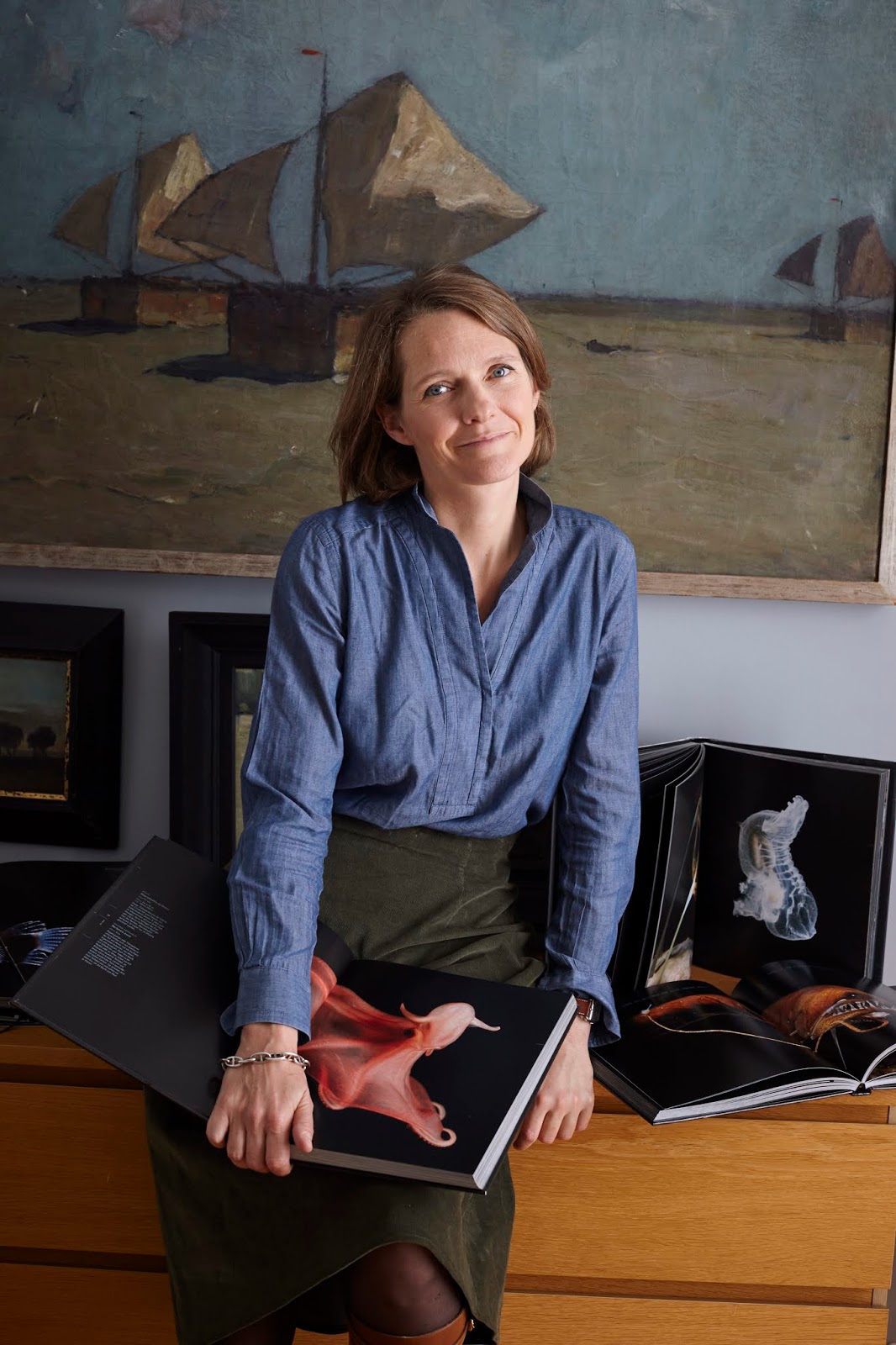
Claire Nouvian with her book: The Deep: The Extraordinary Creatures of the Abyss/Courtesy of Goldman Environmental Prize


This is a story I wrote for New Internationalist on how an encounter with strange creatures of the abyss tuned a French filmmaker into a passionate guardian of the deep and an untiring campaigner. Against all odds, Claire Nouvian managed to convince France to ban deep-sea bottom trawling, a devastating fishing method, which annihilates everything in its path.  In 2016, the entire EU banned the practice. This was an amazing victory for Nouvian and her small environmental NGO Bloom. 

She had hoped to catch her breath after the long campaign, but then another destructive fishing practice caught her attention: electric ‘pulse’ fishing. “It’s the same story, but with a different destructive practice...”

Here is the story of her fight:

A glimpse into an unknown world alive with mysterious and strange creatures turned Claire Nouvian into a formidable defender of the deep sea – one who survives on little sleep - armed with passion, hard facts and a steely determination.

In 2001, Nouvian, 44, a French wildlife filmmaker and journalist, who grew up in Algiers, Paris and Hong Kong and speaks six languages, was filming a documentary at the Monterey Bay Aquarium in California. “I discovered deep sea creatures – extraordinary creatures I couldn’t have imagined, like giant jellies, dragonfish and vampire squid,” says Nouvian, who has recently won the 2018 Goldman Environmental Prize for ending deep-sea bottom trawling in Europe. 

 The deep ocean is the largest habitat on earth and home to some of the oldest living creatures on the planet, such as 4000-year old corals. But this huge diversity is being destroyed by deep-sea bottom trawlers – boats, which tow a heavily-weighted net that is dragged multiple times over the seafloor. “It is one of the most destructive forms of fishing, which annihilates everything in its path. The fishing industry practices a boom and bust model: they go somewhere new and take everything there, then move on to the next fish stock. It’s serial depletion. They are roving bandits,” says Nouvian, still visibly upset.

Determined to challenge this, Nouvian founded the NGO Bloom in 2005. “I was naïve. I thought that if we could tell the world that the deep sea is full of life and is being destroyed, it would stop.” So she put together a book and an exhibition describing the wonders and fragility of the deep sea. Both received a lot of media attention, but it was not enough.  “I understood the need to take it to a political level.”

In 2008, as the EU was preparing reforms of its deep-sea fishing laws, the young activist saw her chance to influence policy at both the French and EU levels. In Europe, the main deep-sea fleet was French and belonged to supermarket chain Intermarché.  “A EU campaign could only succeed if we could change the French position. But in France, fishermen were heroes and the public didn’t care about protecting the ocean. So Nouvian and her Bloom colleagues launched a sustained campaign, addressing the issue from all fronts. They worked with scientists to publish fact-based reports and launched a public consumer campaign that ranked French supermarkets according to their fishing practices - Intermarché came last. This was followed by a media blitz, with giant anti-trawling posters in front of Paris’ gare du Nord (from where politicians boarded trains to Brussels), newspapers ads, press statements and social media drives. They also visited schools, organised demonstrations, and collected 900,000 signatures for an anti-trawling petition, with the help of a brilliant cartoon based on Nouvian’s TEDx talk, which went viral.

The relentless campaigning paid off: in January 2014, Intermarché announced that it would no longer fish below 2,600 feet (800 meters) and would phase out the sale of deep-sea fish by 2025.

A year later, France - in response to overwhelming public pressure - finally agreed to a ban on deep-sea bottom trawling below 2,600 feet (800 meters). In 2016, all EU member states followed suit.

It was a huge victory, but it took a toll on the small team. “We were dead tired, completely toasted. It was a very violent fight. I was not a big NGO, so the fishing industry assumed I would let go if they put enough pressure. They tried to discredit and smear me. I got death treats and intimidation. It was constant.”

She adds with a grin:  “It was not pleasant, but the more I get threats, the more I think that I am doing the right thing!”  And after a short pause, she continues:  “I am blessed to be in Europe because in other countries, I’d be blown up by now.”

Nouvian had hoped to catch her breath after the long campaign, but then another destructive fishing practice caught her attention: electric ‘pulse’ fishing. “It’s the same story, but with a different destructive practice,” and this time, the Netherlands is the main culprit.

So, with Bloom, Nouvian is now campaigning for a full EU-wide ban on electric fishing, which she describes as “putting a Taser in water, electrocuting marine life and destroying ecosystems”. She also wants to end harmful fisheries subsidies at the international level as they encourage overfishing and destructive fishing practices around the world.

“It’s an on-going fight. But it’s a privilege of living in a democracy to be able to open our mouths, so we need to do it. We will not let go.”


Tuesday, 24 April 2018

The Women who Stopped the Nuclear Deal

Liz McDaid and Makoma Lekalakaka in front of the country’s only nuclear power station - Koeberg/Courtesy of the Goldman Environmental Prize
 
 
Two South African women, Makoma Lekalakala and Liz McDaid, yesterday have won the Goldman Environmental Prize, the world’s largest award honouring grassroots environmental activists, for stopping their government’s massive secret nuclear deal with Russia – a deal that would have threatened the country’s health, environment and finances.

Their improbable victory against the powerful nuclear industry and South African government shows that, in McDaid’s words, ‘people can make a difference and that the country will not be sold to the highest bidder. It is a victory for democracy.'

I’ve met both women, who have been fighting injustice most of their lives, in London last week, while on their way to collect their award in San Francisco. Here is their story, which I have written for the New Internationalist.

Exposing corruption

In 2014, under the leadership of President Jacob Zuma, South Africa’s government made a secret deal with Russia to build eight to ten nuclear power stations throughout the country (currently the country has one station, operated by the state-owned electricity utility, Eskom). The $76 billion deal was unprecedented in scope and cost, and its terms assigned all liability for nuclear accidents to South Africa.

It looked like a done deal, but the two women stood in the way.

 ‘I work with women who don’t have access to electricity - they cannot afford to pay for it - so building a trillion rand nuclear power project with taxpayers’ money was never going to be the answer,’ said Lekalakala, 52, the director of the environmental organization Earthlife Africa.

Research has shown that nuclear is not needed for the country’s energy future, added McDaid, 55, climate change coordinator for Southern African Faith Communities’ Environment Institute (SAFCEI), which had long advocated for renewable energy to address climate change and had taken a stance against South Africa’s nuclear industry.

The women started asking how the government was making decisions about the country’s energy needs, and when they started scrutinizing the processes, they uncovered unlawful activities. Earthlife Africa obtained a copy of the secret South African-Russian agreement, which they shared with the Mail & Guardian, who published it in February 2015. The newspaper investigation uncovered more corruption and misconduct.

Both women decided they had to act. ‘You just don’t roll over when wrongdoing happens: you fight,’ McDaid said.

So Lekalakala, who is from Johannesburg, and McDaid from Cape Town, pooled their shoestring budgets, resources of skill and constituency within their small environmental NGOs to create a formidable collaboration. Along with their organizations, they highlighted the health and environmental risks, and financial implications from this massive nuclear upscaling.

For more than two years, they woke up early every Wednesday to greet ministers with anti-nuclear banners as their shiny black cars approached Parliament. Sometimes, it was just McDaid in the rain, sometimes they were dozens of protestors. They also organized pickets in front of the department of environmental affairs and the state-owned energy company Eskom, as well as countless protests, rallies, public meetings and petitions.

Seeking a just energy future

In the process, they built a broad coalition of various interest groups: women’s groups, youth groups, civic society groups, organizations against corruption, religious groups, trade unions and businesses. ‘So many different people and so many different organizations got involved. They could relate to what we were doing, they could see the impact of the deal on their own lives,’ Lekalakala said.

‘It started with the environment, but now, it's a whole movement for a more just future: us standing up and holding our government accountable in a democracy. And the movement keeps growing,’ McDaid added.

Along with their organizations, the two women also took the Zuma government to court on the grounds that the deal had been kept secret and bypassed legal process, without any public consultation or parliamentary debate. For many people, the deal was emblematic of the lack of transparency and corruption in the Zuma government in which a few people benefited while the rest paid the price. ‘The nuclear deal was never about energy. It was about the greed of a few individuals,’ as McDaid puts it.

The court battle was fought over a year and a half. But on April 26, 2017, the Western Cape High Court ruled that the nuclear power project was unconstitutional, invalidating the agreement and stopping the nuclear programme. The landmark legal victory also means that any new nuclear deals for South Africa have to be disclosed and approved by Parliament.

‘When the judge made the announcement that we got everything we had asked for, I broke down in tears,’ remembered Lekalakala. ‘And I shouted right there in court, although I knew that you have to keep silent in court,’ added McDaid.

‘So many times we thought that the forces against us were too great. Our first court appearance got postponed and we were running against time. They attempted to block us, to wear us out, to make us run out of money (we did run our of money, but our legal team were amazing: they kept carrying on), but all this only made us more determined to fight,’ said McDaid.

Despite their huge victory, the women fear that the nuclear build could be resurrected once more funding becomes available. So they are continuing their campaign and are calling on the new South African government to remove the entire nuclear build development from its integrated energy plan.

Yet Lekalakala and McDaid are optimistic, believing that their campaign for a transition to a low carbon economy with a decentralized and socially-owned energy supply has never had a better chance of success. ‘The science and the economy are on our side,’ said Lekalakala. ‘The international community agreed that we have reached an unprecedented level of greenhouse gas, so we need to act quickly – there are alternatives to fossil fuels that are more beneficial for the planet and individuals. The world is changing. Everyone is pushing for renewable energy.’


Friday, 25 August 2017

Prafulla Samantara: indigenous land rights' champion

Samantara with the Dongria Kondh/ Credit: Goldman Environmental Prize  


Prafulla Samantara has been threatened, kidnapped and jailed trying to stop a huge mining project on sacred tribal land in Odisha, India.  But he is not afraid and, at 65, not ready to retire. ‘I will keep on fighting until my last breath. I cannot betray the people, the cause,’ he told me when I met him in London in late Spring.

The Indian social justice activist won the 2017 Goldman Environmental Prize  for Asia for his 12-year campaign to block the mine and for securing indigenous communities’ voting rights on such projects.

From a young age, he witnessed the impact of mining and industrial development on small farming communities and the growing inequalities between rich and poor. ‘I’ve seen working people and those at the bottom of society being exploited and suffering. Equality and justice became my guiding principles.’

Yet he recognizes that development is necessary, but not at all costs. ‘In India, 60 million people have been displaced over the last 60 years because of big projects such as mining and dams. Indigenous people are not consulted. They are marginalized, even though they are the owners and guardians of natural resources.’

Odisha, the eastern Indian state on the Bay of Bengal where he grew up, is known for its pristine forests, high mountain peaks and numerous rivers; but also for its vast reserve of minerals – almost a third of the state is under mining concessions.

The Odisha Mining Company had agreed a deal with London-based Vedanta Resources to gouge a $2 billion open-pit bauxite mine on the Dongria Kondh’s land without consulting them. 

‘The Dongria Kondh don’t believe in religion, but in nature. The Niyamgiri Hills are their gods. They get everything from them: their entire livelihood and their social and cultural identity. They believe it’s their duty to protect them at all cost.’ The mine would not only have destroyed their homeland, but also polluted water for millions downstream as far as the Bay of Bengal, and destroyed large areas of protected forests which are home to rare wildlife including elephants and the Bengal tiger. In anticipation of receiving the mining licences, Vedanta illegally annexed 148 acres of forest and bulldozed 12 villages.

You can read my article on Samantara for New Internationalist here.


Friday, 5 May 2017

Rodrigue Katembo - the Congo's park ranger who risks his life to protect wildlife


Rodrigue Katembo/Credit: Goldman Environmental Prize


The best part of my job as a journalist is to spend time with amazing people whom I would never have a chance to meet otherwise.

One of them is Rodrigue Mugaruka Katembo, a former child soldier who has become one of the most passionate defenders of Congo’s natural heritage, first as head ranger at Virunga National Park and now as the director of Upemba National Park, one of Congo’s most spectacular, but also most pillaged, neglected and dangerous parks. 


I’ve met Katembo on one of his rare forays away from Upemba. He spoke in French, in a measured way, sounding more like the civil servant he always wanted to be than the brave ranger who has risked his life many times to protect Congo’s iconic parks. He wants to fight corruption and illegality – a dangerous mission in a country like the Congo.

Katembo was in London last month on his was to San Francisco to receive the 2017 Goldman Environmental Prize for Africa (a sort of Nobel for environmental activists), for exposing illegal oil exploration in Virunga - a UNESCO World Heritage Site and home to one quarter of the world’s critically endangered mountain gorillas. 

He paid a heavy price: during his investigation, he has been kidnapped, tortured and faced mock executions. You might have seen “Virunga,” the 2014 Netflix documentary which recalls that story. 

A year later, he was transferred to Upemba for his own safety. There he is trying to slowly stabilise wildlife. The elephants, which were emblematic of the park, had been poached on a massive scale by the rangers themselves, the military, the police, the locals and the brutal Mai Mai militia- and those who escaped the slaughter had left the protected area.

He has already reintroduced one population of 68 elephants and another larger one is approaching the park’s borders.  Under his watch, no elephants have been poached in Upemba since 2016.  But it’s no easy job.

Since starting work at Upemba, Katembo has fought off armed militia, faced death threats and refused to accept multiple bribes to gain access to the park for illegal mining. He now lives apart from his wife and children for their safety.

“I am not special, ” Katembo simply said. “Yes, I was imprisoned and tortured, but many guards have died doing their jobs.”   Protecting Congo’s national parks is widely recognized as one of the most dangerous jobs in conservation. Over the past 20 years, more than 160 of Katembo’s park ranger colleagues have been killed - and they still continue to get killed today.

“We need to respect their work. We need to be willing to defend what they have died to protect. By protecting the park, we are protecting unique wildlife, local populations’ livelihood and Congo’s natural heritage – which is also the heritage of the whole world.”

Here is my full story on Katembo for Positive News. There are some great photos too! 


Thursday, 30 June 2016

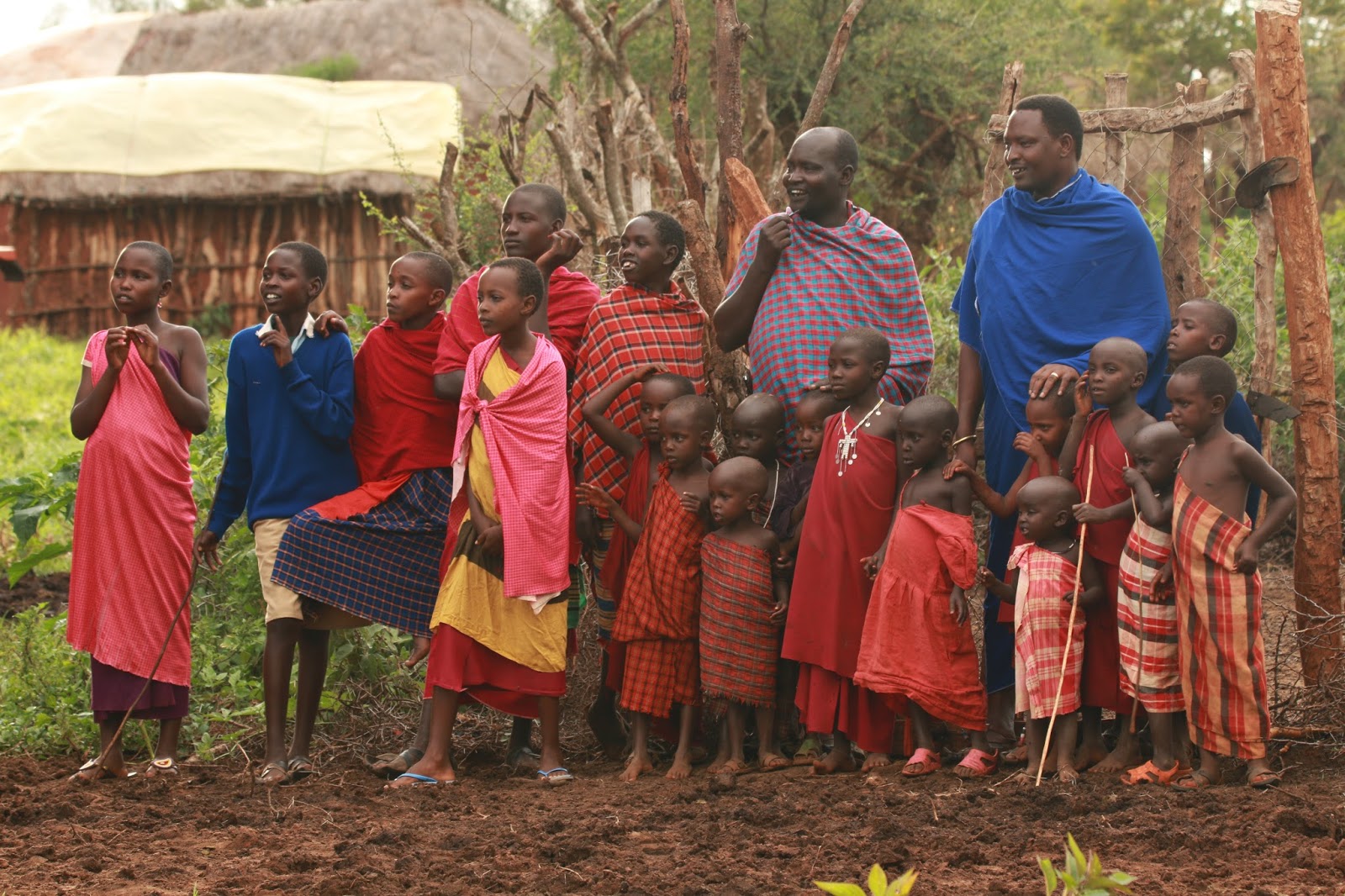
Edward Loure, the Maasai leader who champions indigenous land rights in Tanzania


Edward Loure/courtesy of Goldman Environmental Prize


From the Andes to sub-Saharan Africa, indigenous groups are increasingly fighting for legal ownership of lands their ancestors have occupied for thousands of years – and in the rangelands of Tanzania, one activist believes he’s found a possible solution based on collective ownership.

Edward Loure, a Maasai leader and indigenous land rights activist from northern Tanzania, pioneered an innovative legal mechanism to preserve large expanses of ancestral lands in the Great Rift Valley, protecting both a traditional way of life and wildlife.  It is the first time tribal work has been linked to conservation in Tanzania - creating a model for other indigenous groups elsewhere in Africa and around the world to follow.

Up to two thirds of world's land held by indigenous people are under informal systems not legally recognised by states, according to a recent report by Oxfam International. Communities without formal title to lands where they may have lived for generations can be displaced by large-scale resource extraction projects, sold off to the highest bidder or seized by squatters clearing their land for illegal agriculture, according to the report, backed by 300 organisations worldwide who are pushing to expand land rights.

“Our land means everything to us. If we have no grass pastures, we will not have our cows, and without our cows, we cannot survive,” Loure told me, speaking via Skype from Dar es Salaam.

Loure, who is in his forties, grew up in the Simanjiro plains in the vast northern rangelands of Tanzania. Here communities of pastoralists and hunter-gatherers have lived off the land in harmony with migrating wildlife for centuries.  The savannahs and grasslands of northern Tanzania are home to an abundance of wildlife including gazelles, elephants, wildebeest, zebras, impalas and many other animals that keep the ecosystem in balance. Traditional communities are a vital part of that ecosystem, Loure says. “We depend on our lands and these lands have shaped our cultures and way of life.”

Edward Loure in his community/courtesy of Goldman Environmental Prize

But the pastoralists and hunter-gatherers’ traditional ways of life have been threatened since the 1950s when the Tanzanian government started creating National Parks. These efforts displaced thousands of indigenous people and jeopardized wildlife by destroying migratory corridors. The situation has been exacerbated in recent years by government sell-offs of ancestral lands to hunting and safari companies, and by the encroachment of unauthorised “land grabbers” seeking to use traditional grazing lands for large-scale farming.

Loure’s own community met a similar fate in 1970, when it was forcibly displaced to create the Tarangire National Park. This inspired Loure to join the Ujamaa Community Resource (UCRT), one of the first community-led NGOs in Tanzania, which has championed sustainable development and community land rights for the past 20 years.

Looking for better ways to secure land tenure, Loure saw an opportunity in the strong communal culture among tribes. He worked with UCRT to have a key legal mechanism called Certificates of Customary Rights of Occupancy (CCROs) – the primary mechanism through which land is protected under the Village Land Act – made available to groups, rather than only to individual land-owners. And that opened the door to a string a land victories. 

Over the years, at least 223,000 acres of Tanzania’s northern rangelands have been safeguarded through CCROs. Once their land rights are legally secured, communities can better access, manage and benefit from their natural resources, Loure says.

These communal land rights concepts, innovated in Tanzania, have the potential to have a global impact, says Matthew Brown, Africa Conservation Director at The Nature Conservancy.  “The notion that we need to secure local people’s collective land rights and have it officially signed off at the national level is replicable and is needed in other countries.”


For his innovative indigenous land rights work, Loure was awarded the 2016 Goldman Environmental Prize for Africa in April, a sort of Nobel for grassroots environmental activists.
 
You can read more about Loure’s communal land rights scheme and its impact in this story I wrote for Positive News.


Sunday, 13 March 2016

Remembering Berta Cáceres

Berta Cáceres on the banks of the Gualcarque River in the Rio Blanco region of Western Honduras. The river is a source of water, food, medicine and spiritual identity for the indigenous Lenca people/Courtesy of the Goldman Environmental Prize


Berta Cáceres, the vocal and brave Honduran environmental and indigenous rights activist, was gunned down last week at her home in La Esperanza, Intibuc. Her murder has prompted a flood of tributes and an international outcry, as well as investigations supported by the United Nations and the FBI. 

Cáceres, who is a member of the Lenca indigenous group, the largest in Honduras, was one of the leading organizers for indigenous land rights in Honduras. In 1993, she co-founded the National Council of Popular and Indigenous Organizations of Honduras, or COPINH. For years, the group faced death threats and repression as they stood up to mining and dam projects that threatened to destroy their community.

Last year, Cáceres, 44, won the Goldman Environmental Prize, a sort of Nobel for grassroots environmental activists, for her work opposing the Agua Zarcao dam, one of Central America’s biggest hydropower projects.

Since the right-wing coup against Manuel Zelaya in 2009, activists have been  persecuted by the Honduran government, making Honduras one of the most dangerous places in the world to be an activist or community organiser.
 
This was certainly true for Cáceres.
 
Police said the killings occurred during an attempted robbery, but the family said they had no doubt it was an assassination prompted by Cáceres’s high-profile campaigns against dams, illegal loggers and plantation owners.

“I have no doubt that she has been killed because of her struggle and that soldiers and people from the dam are responsible, I am sure of that. I hold the government responsible,” her 84-year-old mother said on radio Globo at 6.

Cáceres stood up to corporations and helped delay the construction of the Agua Zarca dam, which, if built, would destroy her community's land and the Gualcarque River in Honduras. 

“She was a fearless environmental hero. She understood the risks that came with her work, but continued to lead her community with amazing strength and conviction,” said John Goldman, President of the Goldman Environmental Foundation.

“We mourn the loss of an inspirational leader, and will honor her life’s work by continuing to highlight the courageous work of Goldman Prize winners like Berta,” said Goldman. “She built an incredible community of grassroots activists in Honduras, who will carry on the campaign she fought and died for.”

I’ve been interviewing Goldman Environmental Prize winners for many years and, like Cáceres, they are truly amazing people. Most are ordinary men and women, full of energy and passion, who are totally committed and take great personal risks to protect the environment. The Prize amplifies their voices and affords them some protection, although sadly not enough in Cáceres’s case.

Cáceres’ death should not be in vain. You can join COPINH and call on the FMO (a Dutch Development bank) to withdraw financial support for this project immediately.  Pressuring the largest investor to pull out of the dam will encourage other backers to divest.

To support their call for justice in Honduras, you can donate to COPINH via their trusted partner, Rights Action (scroll to the bottom of the page). This fund will also support Cáceres’ family at this difficult time.


Tuesday, 29 April 2014

Goldman Environmental Prize - celebrating 25 years of environmental activism

2014 Goldman Environmental Prize winners in San Francisco/Courtesy of Goldman Environmental prize

The Goldman Environmental Prize – known as the green Nobel Prize – announced this year’s winners in San Francisco this week. Like in the previous years, the six winners, one from each of the six inhabited continents, are ordinary people fighting for the preservation of our planet.  They have been each awarded $175,000, which makes the prize the largest environmental award in the world. But more than anything else, the prize amplifies their voices, offering greater recognition for their work and inspiring other people to follow suit.


This year marks the 25th anniversary of the prize and I am thinking of all the winners over the years and across continents: all these men and women – 150 of them in total - who campaign against fracking, forest and marine destruction, dam building, toxic and nuclear contamination and the protection of wildlife.  They challenge government and multinational corruption, sometimes risking their lives to make a difference. 


Some past winners have gone to win Nobel Prizes and other recognitions, like Wangari Maathi; others were killed like Ken Saro-Wiwa. Some have achieved resounding victories while others are still fighting.  


I have met and interviewed many of these environmental heroes over the years for various publications in the UK and the US, and have been in awe of their commitment, resourcefulness and personalities.  
 
I am thinking that so many of the issues they have fought over some 10, 20, 25 years ago are still very current today and that the Goldman Environmental Prize is more needed than ever.


Take, for example, Lois Gibbs. She was the first recipient of the Goldman Prize in 1990 (USA) and became a household name when she exposed toxic dumping  in her neighbourhood in Niagara Falls, New York. Wondering if her children’s unusual health problems and those of her neighbours were connected to exposure to leaking chemical waste, she discovered that her neighbourhood was built on top of 21,000 tons of buried chemical waste – the now infamous Love Canal.  Although Gibbs’ campaign spearheaded a government-led clean-up, 25 years on, there is a $113 million lawsuit currently pending as new residents in Niagara Falls fear that history is repeating itself.


And toxic waste dumping continues to threaten many communities around the world today. Last week, I spoke with this year’s Prize winner for Africa, Desmond D’Sa, who fought against government and multinationals to end toxic dumping in “Cancer Valley" in South Durban - one of South Africa's poorest and most polluted areas. He denounced the environmental injustice of uprooting people to force them to live in heavily polluted areas and letting the industries there do as they wish.


I  also remember Willie Corduff from Rossport in Ireland who won the Prize in 2007 (Europe).  He campaigned (and was imprisoned for it) against a $60 billion Shell project, which would run a pipeline across his land. He wanted to raise the question on a national scale about economic development versus community consent and environmental concerns. He is still fighting.


Two years later, I interviewed Marc Ona Essangui, an environmentalist who had been jailed for his fight to protect Gabon's rainforest. Ona, who has been an activist since he developed polio as a child, campaigning for disabled rights and the environment, told me: "My fight is the fight of all the people concerned with the survival of the planet. Our forest is home to the most extraordinary biodiversity. To destroy it would mean the ruin of humanity."
 

 To read more stories of past winners and find out about this year’s winners, visit the Goldman Environmental Prize website.

Saturday, 3 August 2013

Iraq’s first national park approved

Here is a piece I wrote for Positive News yesterday on Iraq's Mesopotamian marshes, which became the country's very first national park. I had met Azzam Alwash in London before he was awarded the 2013 Goldman Environmental Prize for his work in restoring the historic wetlands.

Iraq’s first national park approved

Garden of Eden’ returns to life as Mesopotamian marshlands are officially recognised as Iraq’s first national park 


02 Aug 2013
Azzam Alwash on November 9th 2012 with fish seller in Kirmashiye, Iraq
Azzam Alwash (right) in the Mesopotamian marshlands     Photo © Goldman Environmental Prize

Despite the ongoing violence and instability in the country, Iraq’s cabinet has managed to approve the creation of the nation’s very first national park.

Approving the project last week, Iraq’s Council of Ministers took a momentous step towards protecting the historic Mesopotamian marshes in the south of the country for future generations.

“With this action, Iraq has acted to preserve the cradle of civilisation,” said Azzam Alwash, an Iraqi engineer and environmentalist, who gave up a comfortable life in California to help restore these unique wetlands and win government protection for them.

“We’ve worked for more than ten years to make this happen – and we still have a lot of work ahead – but we now celebrate an important milestone in the history of Iraq,” he told Positive News.

The Mesopotamian marshlands between the Tigris and Euphrates rivers, once the third largest wetlands area in the world, are said by Biblical scholars to be the site of the Garden of Eden, the birthplace of civilisation.

It was once a thriving oasis of aquatic life filled with lush reed beds, water buffalo and birds – twice the size of the Florida Everglades and in the middle of a desert. And it was the home of the indigenous Ma’dan Marsh Arabs, direct descendants of the ancient Sumerians.

But in the early 1990s, Saddam Hussein wiped out the ancient marshlands in retaliation against Shia Muslim rebels who had staged an uprising after the first Gulf war and fled there for refuge. He built massive canals that drained all the marshes’ water, then set fire to the reeds and villages, turning the whole area into a vast salt-crusted desert. The United Nations Environment Programme called this action the worst environmental disaster of the last century.

“I expect every self-respecting birder to come to Iraq to complete their life list”
When Saddam’s regime fell, Alwash returned to Iraq and founded the environmental NGO, Nature Iraq, to try to restore the marshes. Over the past decade, he has worked with local people and the government, surveying the region and developing a master plan to resurrect the area.

Now, although greatly changed, the marshes have been re-flooded in many areas and are starting to flourish again. Reed beds, birds, fish, water buffalo and the Ma’dan have returned.

Alwash, who won the 2013 Goldman Environmental Prize for his efforts to restore the wetlands, said he got the idea of turning them into a national park while visiting Yosemite and other national parks in the west of the United States.

“The first task was of course the re-flooding of the marshes and making sure they thrive again, but just as importantly was that the Marsh Arabs wanted to come back, and that, when they came back, they would have a decent way of life.”

Nature Iraq envisions the national park providing both a refuge for Iraq’s marshland biodiversity and a sustainable boost to the local economy through eco-tourism and development projects that bring social benefit.

“As for visitors, the first ones, I am hoping, will be the 20,000 oil field workers in the south of Iraq. Even at $10 per person, that should be a huge boost to the local economy. As stability in Iraq increases and facilities start being built to accommodate visitors, I expect every self-respecting birder to come to Iraq to complete their life list,” said Alwash.

The bigger barrier to successful restoration, however, is the hydro-politics of the region. Syria, Turkey and Iran, Iraq’s upstream neighbours, are increasingly restricting the flow of the Tigris and Euphrates. A chain of 30 dams (most already completed) along the Turkey-Syria border are reducing the flow of water in Iraq and threatening the marshes’ survival.

“By setting the national park, Iraq commits to dedicate a portion of its increasingly limited water resources to keeping the marshes alive and thriving. Furthermore, it is a good argument in negotiations with Turkey to dedicate special spring releases for environmental preservation,” said Alwash.

But ultimately, the marshes can only be protected if there is an international agreement on water-sharing, he added. “The preservation of the marshes is not only Iraq’s duty: it is the world’s duty. This is the cradle of civilisation. This is where agriculture started. This is where writing was invented. This is where Abraham was born.”

Tuesday, 21 August 2012

Ikal Angelei fights giant dam

Ikal Angelei/courtesy of Goldman Environmental Prize
 In my work, I come across numerous projects designed to bring progress and development to developing countries across the world. Often, these projects affect the environment and clash with human rights of local populations – sometimes violently so.   I often wonder how to strike the right balance?

I’ve recently spoken with Ikal Angelei, a remarkable young Kenyan whose fight to save Lake Turkana, the world’s largest desert lake from Africa’s biggest dam project, has thrust her at the forefront of one of the most polarizing environmental and economic battles in Africa.

When built, the Ethiopian-led Gibe III Dam will nearly double electrical output to Ethiopia, and Kenya is expected to purchase a third of the power generated from it. The Ethiopian and Kenyan governments believe the energy is vital to fuel development, and the project had the backing of China, the World Bank and other major investors.  But Angelei worried that the giant dam would deprive local communities from vital water and cause more bloodshed in an already volatile region.  “The dam will cause further scarcity of resources and exacerbate conflicts in an already fragile region. Communities there are in need of water and food much more than electricity.”

She made it her mission to stop the dam. She founded Friends of Lake Turkana and worked tirelessly to inform local chiefs and elders about the implications of the project. She also approached academics, politicians and influential people across the world in person and through social media.

Angelei addressing villagers on lake's shores/courtesy of the Goldman Environmental Prize

Amazingly, she has succeeded in stopping the dam in its tracks through effective campaigning of the Kenyan parliament and UNESCO.  For her work and courage, the 31 year old has been awarded the 2012 Goldman Environmental Prize – a sort of Nobel Prize for grassroots environmental activists.

When asked what she would tell her critics who argue that her campaign is blocking much needed development in Kenya and Ethiopia, she replied:

“We are witnessing governments destroy the environment to increase their GDPs.  While we appreciate the need to develop, meet Millennium goals by 2015, and agree that we all have to solve the current problems of access to energy and employment, we cannot achieve these at the expense of the environment, especially with the availability of alternatives and the reality of climate change."  She pointed out that both Kenya and Ethiopia have wind and geothermal energy resources.

"Progress cannot leave people or the Earth worse off. We are not against development: we can develop in a sustainable way, in a way that would not violate human rights and destroy the environment."

 Read my article about Angelei in the summer issue of the New Internationalist here.