Sunday, 22 May 2011

Ursula Sladek – mother of five leads green revolution


Ursula Sladek/Courtesy of the Goldman Environment Prize

 I wrote a piece for the Guardian this Saturday about Ursula Sladek, who created one of Europe’s first green energy companies, owned by the people for the people, while raising five kids. What interested me in this story is that she was just an ordinary person without any scientific or business training – and already more than busy with her large family – yet, she decided she had to do something after the Chernobyl meltdown 25 years ago. 

Sladek, 64, never planned to create a power company, but felt compelled to act when radioactive residues from Chernobyl some 2000 km away were found on the playgrounds, gardens and farmlands of Schönau, the small Black Forest town where she lives with her family.

“I had to think about whether my children could eat our spinach and lettuce or drink our milk, and whether they could play in the sandpit. I also knew I needed to look at the broader picture and question the use of nuclear energy.  You cannot have five children and not care about the world they have to live in,” she says.

So Sladek, her husband, a GP, and a group of like-minded parents began researching the energy industry in Germany to see if they could limit their community’s dependence on nuclear power.

They started small, researching how energy was produced and how they could save it. Then they tried to motivate the whole town into saving energy by running campaigns and competitions. Later, when the regional power company refused to increase renewable energy and reward efficiency, they decided to take over the grid themselves.  “It was a crazy idea because none of us knew how to run an electricity company.”

Sladek and her group created Schönau Power Supply (EWS), a citizen-owned cooperative, and launched campaigns to be allowed to manage the grid and raise the necessary funds. “We had to learn how to act politically, how to campaign, how to run a company and an awful lot about electricity. When I started, the only thing I knew was that electricity was coming out of the socket. But learning all this was not too difficult. If you really want something, you can learn what you need,” she simply says.

From providing one million kilowatt hours to 1,700 customers in 1998, EWS now provides over 400 million kilowatt hours to over 100,000 customers throughout Germany.  And Sladek is hoping for one million customers by 2015.

And with a flurry of new customers wanting to switch to EWS after Fukushima, Sladek is busier than ever. “I would have liked to have more time for my children and now my grandchildren. But actually, I am doing what I do for them, and they know it. It is their future I am trying to protect and so I really think it is worth it.”

Last month, Sladek was named European winner of the 2011 Goldman Environmental Prize, a sort of Nobel Prize for environmental heroes.

You can read my Guardian article here.

Sunday, 15 May 2011

AI global report urges support for historic changes


As Amnesty International launches its annual report on human rights on the eve of its 50th anniversary, the world stands on the threshold of historic change.


Courageous people are standing up and speaking out in the face of bullets, beatings, tear gas and tanks. This bravery is sending a signal to repressive governments that their days are numbered. But they are fighting back.


The international community, including the UK Government, must decide if they stand on the side of reform or repression.


AI report on “The state of the world’s human rights”, released on Friday, says that growing demands for freedom and justice across the Middle East and North Africa and the rise of social media offer an unprecedented opportunity for human rights change – but this change stands on a knife-edge.

Says Salil Shetty, Amnesty International Secretary General:  “Not since the end of the Cold War have so many repressive governments faced such a challenge to their stranglehold on power. The demand for political and economic rights spreading across the Middle East and North Africa is dramatic proof that all rights are equally important and a universal demand.

…The call for justice, freedom and dignity has evolved into a global demand that grows stronger every day. The genie is out of the bottle and the forces of repression cannot put it back.”

Unprecedented access to information, means of communication and networking technology, as social media networks, are fuelling this new global activism.

But government are fighting back. Governments in Libya, Syria, Bahrain and Yemen have shown a willingness to beat, maim or kill peaceful protestors to stay in power. Even where dictators have fallen, the institutions that supported them still need to be dismantled and the work of activists is far from over. Repressive governments such as Azerbaijan, China and Iran are trying to pre-empt any similar revolutions in their countries.

The Amnesty report, a global overview that exposes abuses in 157 countries, indeed reveals restrictions on free speech in at least 89 countries; torture and other ill-treatment in at least 98 countries; cases of prisoners of conscience in at least 48 countries; and documents unfair trials in at least 54 countries.

AI is urging the international community to seize the opportunity for change and ensure that 2011 is not a false dawn for human rights.

Thursday, 5 May 2011

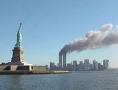
New York 9/11


As the world is pondering the implications of Osama bin Laden’s killing in Pakistan (and I feel very uneasy about it, wishing that he could have been put on trial instead), I was reminded of the poem Iranian poet Majid Naficy (who now lives in Los Angeles) wrote on 9/11. Here it is:

 New York

                        by Majid Naficy

Today
New York bent down
And cried
In the Atlantic waters

She sustained a wound
To her spine

Then she remembered
The old wounds of her kids
From the Netherlands and Ireland
From black Africa
From Poland and the Ukraine
And the oases  of the Holy Land

No! She will rise again
And let the sun
Shine on her face
And her children
Will hold hands
And come back to dance
Around her whirling skirt

                        September 11, 2001

Sunday, 1 May 2011

Avaaz changes the world in a click


Over the months, I have posted several entries about the online activist network Avaaz’ various campaigns, and asked you to support some of them and sign their petitions - and I have done so myself. But I have often wondered if activism by merely clicking a button was enough and if these petitions made any significant changes.

Well, it seems that the answer is a resounding YES.  Avaaz, which means voice in Farsi and several other languages, now counts an astonishing 8.2 million members and is growing by 1000,000 people a week, according to the organization.  Working in 14 languages, it is the world’s largest online activist community with members in all 192 UN countries, including Iran and China, where the site is illegal.

An annual poll of 10,000 members help decide which issues they should focus on - and the range is enormous. Some of their demands are simple, such as  closing Guantánamo, or  very broad, such as fighting climate change.

Avaaz was founded only four years ago by 34-year-old Canadian Ricken Patel to “close the gap between the world we have and the world most people want.”  He and his team are doing so by galvanising public opinion online and using it to influence those with the power to implement change.  They work by collating monumental petitions and dropping them into the inboxes of their targets.  If more convincing is needed, they stage sit-ins, rallies, phone-ins and media stunts. And at the last resort, they launch hard-hitting advertising campaigns in the media and on billboards.

Avaaz' sheer numbers make them a force impossible to ignore. Two weeks ago, 650,000 Indians joined the group’s campaign for a powerful new anti-corruption bill, and they won.  Their recent causes include fighting political corruption in Italy, media-corruption in the UK and Canada, environmental destruction in Brazil and more. And across the Middle East,  democracy activists are getting vital equipment and communications support funded by donations from almost 30,000 of its members.

And the press is taking notice. The Times (London) called Avaaz:  'One of the most important new voices on the global stage' and hundreds of stories have been written about their work.

So keep signing Avaaz' petitions and join in their actions….


Friday, 15 April 2011

Most Mira festival – hope in a deeply divided post-war Bosnia

Today’s judgment by the International Criminal Tribunal for the former Yugoslavia (ICTY), convicting two Croatian generals of responsibility for crimes against humanity, is a strong victory for Balkans war’s victims.

But in Bosnia, sixteen years after the signing of the Dayton Agreement, the region is still deeply scarred and profound divisions fester underneath a fragile peace. Last year’s Bosnian elections saw a resurgence of nationalism and threatening rhetoric – on an even larger scale than before the war.

While traditionally, Serbs, Croats and Bosniaks have lived and worked together in the country, the children born after the war are completely segregated.  They live in different areas, go to different schools where they learn different versions of their country’s history, and never meet children from another ethnic/religious background.
But once a year in May since 2009, some 450 children from all ethnic groups in the Prijedor region of Northern Bosnia come together for Most Mira (Bridge of Peace) festival, a festival of dance, drama, music and arts where they learn new skills, develop friendships and build a new future.  

The festival is run by a growing number of volunteers from all over the world and is the brainchild of Kemal Pervanić, a Muslim from North West Bosnia who survived the infamous Omarska concentration camp and now lives in England, where he founded the charity Most Mira in 2005.   

Pervanic was so alarmed at the mistrust and hatred he discovered during his visits back to his hometown of Kevljani that he decided to try to bring the children together and “build a bridge of understanding and tolerance between youngsters who have learned only fear and distrust.”   Many of these children have now developed lasting friendships across ethnic groups.   

The weeklong festival, which will run this year from May 16 to May 21, also provides one of the rare opportunities for these children to engage in the arts in a region whose economy has yet to recover from the war.

The project almost collapsed when Pervanic realized that one of the local teachers he had enlisted into the scheme was one of his interrogator/torturer in Omarska.

Pervanic is the author of The Killing Days – My Journey through the Bosnian War and a human rights activist. He contributes regularly to conferences and educational talks on issues relating to genocide and human rights, as well as to TV and radio programmes about Bosnia, The Hague war crimes trials, and issues such as citizenship. 
He has an MA in Conflict Resolution from Bradford University. I've met him for an article a few years ago and we have remained in contact.

Most Mira needs help: if you want to get involved or make a donation, click here.

Tuesday, 12 April 2011

Stop Forced Evictions of Roma in Serbia


 “They came with trucks and police and vans. We all had to leave in 20 minutes. I lost...everything. I wasn’t even there when the house was taken down.” Tomica, Belgrade

Since 2009, Roma communities in Belgrade, Serbia, have been living under the constant threat of forced eviction by the authorities. Some, like Tomica, have already lost their homes. This is a violation of their right to adequate housing.

Roma are already among the poorest people in Serbian society and face systematic discrimination. They are excluded from public life and forced to live in informal settlements without access to basic services like water and sanitation.

The Serbian government should have put safeguards in place to protect those affected by evictions. Yet Roma are rarely informed about the authorities‚ plans, let alone consulted. When alternative accommodation has been provided, it is substandard. Some evicted Roma have been moved into segregated settlements on the outskirts of Belgrade, where they live in metal containers while others have been forcibly displaced to southern Serbia.

The threatened evictions can only prolong this cycle of poverty and human rights abuses.

Roma communities are taking action to challenge the evictions and defend their rights, and Amnesty International is urging everyone to support their effort by signing this petition.

Thursday, 24 March 2011

Carrara Marble - They’re destroying Michelangelo’s mountain to make toothpaste

Carrara marble mountain/Francesco Pegollo


 I am working on a story on how out-of-control marble quarrying is destroying the Apuan Alps, the people who live there and a culture that has developed over the past 2000 years around this amazing stone.

Carrara's quarries are the largest in the world and produce the whitest and most beautiful marble.  It is from this stone that Michelangelo carved his tender Pietà  and magnificent David, and artists from all over the world – from Henry Moore and Isamu Noguchi to Louise Bourgeois and Anna Chromy - have been bewitched by it.

But now, most of the marble formed over millennia in the Apuan mountains high above Carrara is no longer turned into great works of art or proud buildings, but ground into a fine powder - calcium carbonate -  which is used in everything from cosmetics and toothpaste to paper, paint and food stuff.  Carrara marble is now  literally squeezed from a toothpaste tube.

“We don't want to reduce Michelangelo's mountain to calcium carbonate,” says Elia Pegollo, an environmentalist. “Our mountain belongs to the world, to humanity. It has spoken to Michelangelo and sculptors from all over the world. We want our mountain to be able to speak again and our marble to be used in a noble way.”

Elia Pegollo
  Seen from the air or the beaches, the mountains appear covered in snow.  
V. Mistiaen
 From close up, the high vertical faces and giant benches of the open cast excavations are both frightening and breathtaking. They look like colossal white cathedrals on the moon.


V. Mistiaen